
Repaglinide
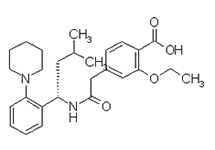
Repaglinide is oral hypoglycemic agent. The onset of action is rapid but the duration of action is short. Repaglinide is used in the treatment of non-insulin dependent diabetes. It may also reduce the long term cardiovascular, cerebrovascular and renal effects of diabetes.
Primary Characteristics
It belongs to Piperidinobenzyl.
It belongs to Insulin agonist pharmacological group on the basis of mechanism of action and also classified in Antidiabetic Agent pharmacological group.
Molecular Weight: 452.6 · Solubility in Water: null · Solubility in Alcohol: null · Non-proprietary name: Repaglinide.
Pharmacokinetics
Absorption: Repaglinide has an oral bioavailability is 56% (±7%).
Distribution: Repaglinide has a volume of distribution is 0.52(0.35-0.69)l/kg. plasma protein binding is > 98 %.
Elimination: plasma half-life is 0.8(0.6-1)hr, renal excretion is 1.45(0.3-2.6)%.
Advertisement
Indications
Repaglinide is primarily indicated in conditions like NIDDM, Type II diabetes mellitus.
Contraindications
Repaglinide is contraindicated in conditions like Coma, Diabetic ketoacidosis.
Dosage
Repaglinide's dosage details are as follows:
| Dose | Single Dose | Frequency | Route | Instructions |
|---|---|---|---|---|
| Adult Dosage | ||||
| 1.25 mg | 1.25 mg | Every 8h | PO | Maximum dose: 4 mg. |
| Paediatric Dosage (20kg) | ||||
| 0 – 0 | — | — | Not recommended in this age group | |
| Neonatal Dosage (3kg) | ||||
| 0 – 0 | — | — | Not recommended in this age group | |
Drug Interactions
Always consult your physician for the change of dose regimen or an alternative drug of choice that may strictly be required.
Side Effects
The signs and symptoms that are produced after acute overdosage of Repaglinide are Nausea, Sweating , Seizures, Convulsions , Coma, Cerebral damage.
Repaglinide is known to cause more or less tolerable side effects which are usually transient. These include Allergy , Anaphylactoid reactions, Bronchitis , Chest pain, Constipation , Diarrhea, Headache, Hypoglycemia, Nausea and vomiting, Sinusitis , Thrombocytopenia.
Warnings / Precautions
Interference in Pathology
Repaglinide may interfere in the diagnosis of Abnormal LFTs .
Available Brands
Storage Conditions
Drug Classification
- 1.18.7.2 — Oral hypoglycemics