
Pergolide
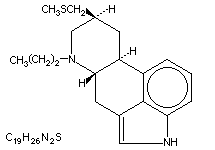
Pergolide is a synthetic ergot derivative and a dopaine agonist, directly stimulates both D1 and D2 receptors.Chemically Pergolide is 8-(methylthio)methyl]-6-propylergoline. Pergolide is used in Parkinson`s disease as an adjunct to levodopa/carbidopa, prolongs the response to Levodopa in patients with response fluctuation. The drug may also benefit patients not receiving Levodopa. It works by stimulating dopamine receptors in the brain.
Primary Characteristics
Pergolide is also known as Pergolide Mesylate.
It is of Synthetic origin and belongs to Ergot Alkaloid.
It belongs to Dopamine agonist pharmacological group on the basis of mechanism of action and also classified in Antiparkinson Agents pharmacological group.
Molecular Weight: 410.6 · Solubility in Water: null · Solubility in Alcohol: null · Non-proprietary name: Pergolide.
Pharmacokinetics
Distribution: Pergolide has a plasma protein binding is 90 %.
Elimination: it is metabolised via Hepatic, plasma half-life is 27 hr, renal excretion is 50 %.
Advertisement
Indications
Pergolide is primarily indicated in conditions like Parkinsonism, Parkinson's disease (adjunctive with levodopa), Parkinson's disease (monotherapy).
Pergolide is also indicated for secondary conditions like Hyperprolactinaemia, Tourette's syndrome.
Contraindications
Pergolide is contraindicated in conditions like Pericarditis, Valvular heart disease, Fibrositis, Valvular heart disease, Hypersensitivity to any component of product.
Dosage
Pergolide's dosage details are as follows:
| Dose | Single Dose | Frequency | Route | Instructions |
|---|---|---|---|---|
| Adult Dosage | ||||
| 50 ug | 50 ug | Every 12h | PO | On days 2-4, then 100-200 ug daily every 3-4 days in 3 div.doses. |
| 150 ug | 150 ug | — | PO | On day 1 at night. |
| Paediatric Dosage (20kg) | ||||
| 0 – 0 | — | — | ||
| Neonatal Dosage (3kg) | ||||
| 0 – 0 | — | — | Not recommended in this age group | |
Drug Interactions
Always consult your physician for the change of dose regimen or an alternative drug of choice that may strictly be required.
Side Effects
Pergolide in overdosage may give rise to further complications which include Myocardial infarction , Cardiac arrhythmias, Syncope , Rashes, Allergic reactions , Chest pain .
The signs and symptoms that are produced after acute overdosage of Pergolide are Seizures, Fainting , Agitation, Nausea & vomiting, Tingling.
Pergolide is known to cause more or less tolerable side effects which are usually transient. These include Anorexia , Anxiety, Confusion, Constipation , Diarrhea, Dizziness, Drowsiness, Dry mouth, Dystonic reactions, Hallucination , Loss of appetite, Nausea, Palpitation, Rhinitis , SomnolenceX, Stomach upset, Stomachache , Tremors, Vasodilation , Weakness.
Warnings / Precautions
Available Brands
None recorded.
Storage Conditions
Drug Classification
- 1.9.1 — Drugs used in parkinsonism