
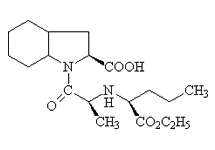
Perindopril
Perindopril is angiotensin-converting enzyme (ACE) inhibitor used in the treatment of hypertension, congestive heart failure, and various renal syndromes such as diabetic nephropathy and scleroderma. Perindopril is a prodrug, converted to an active form before exerting its effect.it has affinity for ACE and competes with angiotensin I, the natural substrate, to block its conversion to angiotensin II. Angiotensin II is a potent vasoconstrictor and a negative feedback mediator for renin activity. Thus, as a result of lower angiotensin II plasma levels, blood pressure decreases and plasma renin activity increases. Decreases in plasma angiotensin II levels reduce aldosterone secretion, with a subsequent decrease in sodium and water retention. It also dilates arterioles, thereby lowering total peripheral vascular resistance.
Primary Characteristics
Perindopril is also known as Perindopril Erbumine.
It belongs to Indole.
It belongs to Angiotensin converting enzyme inhibitor-ACEI pharmacological group on the basis of mechanism of action and also classified in Antihypertensive Agents pharmacological group.
Molecular Weight: 368.47 · Solubility in Water: freely soluble · Solubility in Alcohol: freely soluble · Non-proprietary name: Perindopril.
Pharmacokinetics
Distribution: Perindopril has a plasma protein binding is 60%.
Elimination: it is metabolised via extensively Hepatic, plasma half-life is 0.8-1 hrs, renal excretion is 75 %.
Advertisement
Indications
Perindopril is primarily indicated in conditions like Congestive heart failure, Heart failure, Heart failure (adjunct), Hypertension, Myocardial infarction.
Contraindications
Perindopril is contraindicated in conditions like Aortic stenosis, Angioedema, Hypersensitivity to the drug.
Dosage
Perindopril's dosage details are as follows:
| Dose | Single Dose | Frequency | Route | Instructions |
|---|---|---|---|---|
| Adult Dosage | ||||
| 2 mg | 2 mg | — | PO | For Congestive heart failure: Dose may be increased to 4 mg once blood pressure acceptability has been demonstrated. |
| 4 mg | 4 mg | — | PO | For Hypertension: once daily. |
| 4 mg | 4 mg | — | PO | For Coronary artery disease: 4 mg for 2 weeks then uptitration to 8 mg once daily. |
| 6 mg | 6 mg | — | PO | Increased to max. after 1 month therapy |
| Paediatric Dosage (20kg) | ||||
| 0 – 0 | — | — | Not recommended for this age group | |
| Neonatal Dosage (3kg) | ||||
| 0 – 0 | — | — | Not recommended in this age group | |
Drug Interactions
Always consult your physician for the change of dose regimen or an alternative drug of choice that may strictly be required.
Side Effects
Perindopril in overdosage may give rise to further complications which include Thrombocytopenia , Leucopenia, Neutropenia , Paresthesia, Myocardial infarction .
The signs and symptoms that are produced after acute overdosage of Perindopril are Hypothermia, Circulatory arrest.
Perindopril is known to cause more or less tolerable side effects which are usually transient. These include Abdominal pain, Asthenia , Constipation , Cough , Diarrhea, Dizziness, Dry cough, Dyspepsia , Epigastric discomfort, Fatigue, Headache, Mood swings, Nausea, Rashes , Taste disturbances, Tinnitus.
Warnings / Precautions
Interference in Pathology
Perindopril may interfere in the diagnosis of Abnormal renal function test, Serum bilirubin raised, Serum creatinin raised.
Available Brands
Storage Conditions
Drug Classification
- 1.12.3.3 — ACE inhibitors