
Dorzolamide
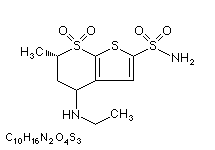
Dorzolamide (HCl) reduces intraocular (eye) pressure and is used to treat glaucoma and elevated intraocular (eye) pressure. Dorzolamide and bringolamide both work by inhibiting earbonic cmhydrase (isoemynell which is found in the ciliary body epithelium. This reduce the formation of biearbonate ions, which recluces fluid transport and thus IOP. reduces IOP by reducing aqueous humar production. They are licensed for use in pateints resistant to beta-blokess or those in whom beta-blockess are contra-indicated. They are used alone or as an adjuant to a topical beta-blocker.
Primary Characteristics
Dorzolamide is also known as Dorzolamide (HCl).
It is of Synthetic origin and belongs to Sulphonamide.
It is classified in Antiglaucoma pharmacological group. It is also classified under Opthalmic Products .
Molecular Weight: 360.9 · Solubility in Water: soluble · Solubility in Alcohol: slightly soluble · Non-proprietary name: Dorzolamide (HCl).
Pharmacokinetics
Distribution: Dorzolamide has a plasma protein binding is 33%.
Elimination: renal excretion is 20% (metabolite).
Advertisement
Indications
Dorzolamide is primarily indicated in conditions like Ocular hypertension, Open-angle glaucoma, Pseudoexfoliative glaucoma, Raised iop.
Contraindications
Dorzolamide is contraindicated in conditions like Renal impairment, Hyperchloremic acidosis.
Dosage
Dorzolamide's dosage details are as follows:
| Dose | Single Dose | Frequency | Route | Instructions |
|---|---|---|---|---|
| Adult Dosage | ||||
| 1 mg | 1 mg | Every 8h | Ophthalmic | - |
| 2 % | 2 % | Every 8h | Ophthalmic | drops with topical beta-blockers apply towice daily. |
| Paediatric Dosage (20kg) | ||||
| 0 – 0 | — | — | Not recommended in this age group | |
| Neonatal Dosage (3kg) | ||||
| 0 – 0 | — | — | Not recommended in this age group | |
Drug Interactions
Always consult your physician for the change of dose regimen or an alternative drug of choice that may strictly be required.
Side Effects
Dorzolamide is known to cause more or less tolerable side effects which are usually transient. These include Asthenia , Burning, Conjunctivitis, Inflammation, Keratitis, Lacrimation, Local allergies, Nausea, Ocular irritation, Photophobia , Rarely hypersensitivity reactions, Stinging, Tearing, Urticaria, Vision disturbances, Xerophthalmia.
Warnings / Precautions
Interference in Pathology
Dorzolamide may interfere in the diagnosis of Not well documented.
Available Brands
Storage Conditions
Drug Classification
- 1.21.4.4 — Carbonic anhydrase inhibitors