
Docetaxel
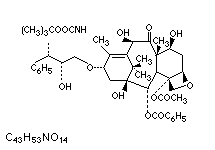
Docetaxel is antineoplastic agent, also known as anticancerous drug, is an alkaloid ester derived from the wastern yew and european yew. It has been approved recently for clinical use. Docetaxel is effective in the treatment of different cancers (e.g., ovarian and breast cancer) to slow or stop the growth of cancerous or abnormal cells. Docetaxel is used in combination with different anticancerous drugs to obtain best therapeutic results and reduce toxicity or side effects.
Primary Characteristics
It is of Semi Synthetic origin and belongs to Taxol Trihydrate.
It is classified in Antineoplastic Agent, Antimicrotubular pharmacological group.
Molecular Weight: 861.94 · Solubility in Water: insoluble · Solubility in Alcohol: null · Non-proprietary name: Docetaxel.
Pharmacokinetics
Distribution: Docetaxel has a volume of distribution is 67.3 l/m2. plasma protein binding is > 95%.
Elimination: it is metabolised via extensive by liver, plasma half-life is 11-18 hr (terminal), renal excretion is < 10%.
Advertisement
Indications
Docetaxel is primarily indicated in conditions like Gastric cancer, Metastatic carcinoma of breast, Non-small cell lung carcinoma, Ovarian cancer, Pancreatic cancer, Squamous cell carcinoma, Squamous cell carcinoma of head.
Docetaxel is also indicated for secondary conditions like Advanced or metastatic breast cancer.
Contraindications
Docetaxel is contraindicated in conditions like Neutropenia, Severe liver impairment.
Dosage
Docetaxel's dosage details are as follows:
| Dose | Single Dose | Frequency | Route | Instructions |
|---|---|---|---|---|
| Adult Dosage | ||||
| 80 mg/ sq.meter | 80 mg/ sq.meter | — | IV Inf | Over 1 hour, repeated every 3 weeks |
| Paediatric Dosage (20kg) | ||||
| 0 – 0 | — | — | Not recommended in this age group | |
| Neonatal Dosage (3kg) | ||||
| 0 – 0 | — | — | Not recommended in this age group | |
Drug Interactions
Always consult your physician for the change of dose regimen or an alternative drug of choice that may strictly be required.
Side Effects
Docetaxel in overdosage may give rise to further complications which include Sensory neuropathy, Neurotoxicity , Hypersensitivity reactions .
Docetaxel produces potentially life-threatening effects which include Neutropenia , Fluid retention syndrome. Careful monitoring is needed with proper medical management.
The signs and symptoms that are produced after acute overdosage of Docetaxel are Mild paresthesia, Cutaneous reactions, Neutropenia , Asthenia.
Docetaxel is known to cause more or less tolerable side effects which are usually transient. These include Alopecia, Arthralgia, Cutaneous reaction, Diarrhea, Elevation of liver enzymes, Eruptions, Erythematous rash, Fatigue, Fever, Flushing, Malaise, Mucositis, Nail discoloration, Nausea, Neutropenia, Onycholysis, Pruritus , Reaction at injection site, StomatitisX, Thrombocytopenia, Urticaria, Vomiting , Weight gain.
Warnings / Precautions
Interference in Pathology
Docetaxel may interfere in the diagnosis of Liver Function Test (LFT) , Complete blood cell count.
Available Brands
Click on a strength to view available brands.
Single Ingredient
Storage Conditions
Drug Classification
- 1.8.2 — Cytotoxic (anti-neoplastic) drugs