
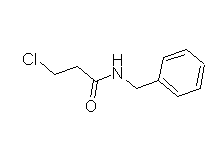
Beclamide
Also known as: Benzchlorpropamide
Beclamide is used in epilepsy for the control of tonic-clonic and simple partial siezures and also in the management of behaviour disorders.
Primary Characteristics
Beclamide is also known as Benzchlorpropamide.
It is of Synthetic origin and belongs to Propionamide.
It belongs to Anticonjuctivitis pharmacological group on the basis of mechanism of action.
Molecular Weight: 197.7 · Solubility in Water: 1 in 10000 · Solubility in Alcohol: 1 in 10 · Non-proprietary name: Beclamide.
Pharmacokinetics
Absorption: Beclamide has an oral bioavailability is 100%.
Distribution: Beclamide has a volume of distribution is 55 litre. plasma protein binding is 45-50%.
Elimination: it is metabolised via 99%, plasma half-life is 2.5-3 hr, renal excretion is 95%.
Advertisement
Indications
Beclamide is primarily indicated in conditions like Behavioural disorders, Epilepsy.
Contraindications
Beclamide is contraindicated in conditions like Uncompensated liver failure.
Dosage
Beclamide's dosage details are as follows:
| Dose | Single Dose | Frequency | Route | Instructions |
|---|---|---|---|---|
| Adult Dosage | ||||
| 10.71 mg/kg | 10.71 mg/kg | Every 8h | PO | - |
| Paediatric Dosage (20kg) | ||||
| 25 mg/kg | 25 mg/kg | Every 8h | Oral | For Paeds under 5 Years of Age |
| Neonatal Dosage (3kg) | ||||
| 0 – 0 | — | — | Not recommended in this age group | |
Drug Interactions
None recorded.
Side Effects
Beclamide produces potentially life-threatening effects which include Thrombocytopenia . Careful monitoring is needed with proper medical management.
Beclamide is known to cause more or less tolerable side effects which are usually transient. These include Dizziness, GI upset, Nervousness, Skin rashesX, Weight LossX.
Warnings / Precautions
Available Brands
None recorded.
Storage Conditions
Drug Classification
- 1.5 — Anticonvulsants and Antiepileptics