
Tetracycline (HCl)
Tetracycline is an antibiotic. Tetracycline is semisynthetically produced from chlortetracycline, which is derived from Streptomyces aureofaciens. It has a wide spectrum of activity against many gram-negative and gram-positive bacteria. The most common uses of tetracycline and other tetracyclines are to treat Chlamydia, Mycoplasma pneumoniae, and rickettsial and gonococcal infections. Tetracycline (HCl) is available in oral and topical preparations, including ophthalmic ointment. Tetracycline received FDA approval in 1953.
Primary Characteristics
It is of Semi Synthetic origin and belongs to Tetracycline.
It belongs to Antibacterial (Proetin synthesis inhibitor) pharmacological group on the basis of mechanism of action and also classified in Polyene Antibiotic, Tetracycline pharmacological group.
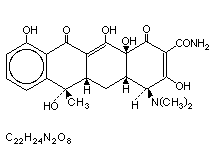
Molecular Weight: 480.9 · pKa: 3.3, 7.7, 7.9 · Solubility in Water: 1 in 10 · Solubility in Alcohol: 1 in 100 · Non-proprietary name: Tetracycline (HCl).
Pharmacokinetics
Distribution: Tetracycline (HCl) has a volume of distribution is 1.31 l/kg. plasma protein binding is 36 - 50%.
Elimination: plasma half-life is 8.5 hr, renal excretion is 30%.
Advertisement
Indications
Tetracycline (HCl) is primarily indicated in conditions like Acne, Acne vulgaris, Amoebiasis, Bacterial infections, Brucellosis, Conjuctivitis, Endocarditis, Granulomatous disease, Heart failure, Long-term treatment of healed gastro-oesophageal reflux disease, Lymphogranuloma venereum, Myeloablative therapy followed by bone marrow transplantation, Myeloma, lymphoma and brain tumours, Pneumonia, Rickettsiae, Sodium depletion, Supraventricular arrhythmias (particularly atrial fibrillation), Syphilis, Trachoma.
Tetracycline (HCl) is also indicated for secondary conditions like Respiratory tract infections, Urinary tract infection.
Contraindications
Tetracycline (HCl) is contraindicated in conditions like Systemic lupus erythematosus, Renal diseases, Hepatic disease.
Dosage
Tetracycline (HCl)'s dosage details are as follows:
| Dose | Single Dose | Frequency | Route | Instructions |
|---|---|---|---|---|
| Adult Dosage | ||||
| 0.75 % | 0.75 % | Every 6h | Ophtalmic | Ointment |
| 375 mg | 375 mg | Every 6h | PO | |
| Paediatric Dosage (20kg) | ||||
| 0 – 0 | — | — | — | Not Recommended under 12 Yrs of Age |
| Neonatal Dosage (3kg) | ||||
| 0 – 0 | — | — | Not recommended in this age group | |
Drug Interactions
Always consult your physician for the change of dose regimen or an alternative drug of choice that may strictly be required.
Side Effects
Tetracycline (HCl) in overdosage may give rise to further complications which include Increase in blood urea .
Tetracycline (HCl) produces potentially life-threatening effects which include Anaphylaxis , Hepatotoxicity , Hepatic dysfunction. Careful monitoring is needed with proper medical management.
The signs and symptoms that are produced after acute overdosage of Tetracycline (HCl) are Vomiting, Diarrhea.
Tetracycline (HCl) is known to cause more or less tolerable side effects which are usually transient. These include Diarrhea, Glossitis, Nausea, Skin reactions, Stomatitis, Vaginitis.
Warnings / Precautions
Interference in Pathology
Tetracycline (HCl) may interfere in the diagnosis of Serum Amylase Estimation in Pregnancy , False Increase in Serum Alkaline Phosphatase and Bilirubin Level , Hingerty Method for Urinary Catecholamines , False Increase in Blood Urea in reanl failure .
Available Brands
Storage Conditions
Drug Classification
- 1.6.2.2.3 — Tetracyclines
- 2.21.1.1 — Antibacterials