
Azathioprine
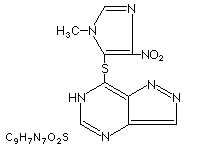
Azathioprine is imidazolyl derivative of mercaptopurine. It functions as a structural analog or antimetabolite. As an immunosuppressant, Azathioprine is commonly used in transplant patients but also is useful in the treatment of rheumatoid arthritis, lupus nephritis, and psoriatic arthritis. Azathioprine is being investigated as an agent to prevent the development of diabetes mellitus. It was originally approved by the FDA in 1968. Adverse effects include bone marrow depression.
Primary Characteristics
It is of Synthetic origin and belongs to Purine Imidazole.
It belongs to Antimetabolites (DNA acting) pharmacological group on the basis of mechanism of action and also classified in Immunosuppressant Agent pharmacological group. It is also classified under Antidotes .
Molecular Weight: 277.3 · pKa: 8.2 · Solubility in Water: < 1 in 10000 · Solubility in Alcohol: > 1 in 10000 · Non-proprietary name: Azathioprine.
Pharmacokinetics
Absorption: Azathioprine has an oral bioavailability is 72.5% (±2.5%).
Distribution: Azathioprine has a volume of distribution is 1.54. plasma protein binding is < 31%.
Elimination: it is metabolised via rapid, plasma half-life is 3-5 hr, renal excretion is <2.
Advertisement
Indications
Azathioprine is primarily indicated in conditions like Autoimmune conditions, Derangement of immune system, Nausea and vomiting (prevention), Postmenopausal osteoporosis, Rejection of organ transplants, Suppression of transplant rejection.
Azathioprine is also indicated for secondary conditions like Moderate to severe rheumatoid arthritis, Prevention of post-operative nausea and vomiting.
Contraindications
Azathioprine is contraindicated in conditions like Renal failure, Impaired hepatic function.
Dosage
Azathioprine's dosage details are as follows:
| Dose | Single Dose | Frequency | Route | Instructions |
|---|---|---|---|---|
| Adult Dosage | ||||
| 175 mg | 175 mg | — | IV | Initially for once |
| 250 mg | 250 mg | — | PO | Initially for once. |
| 175 mg | 175 mg | Every 24h | PO,IV | Maintenance, As Required |
| Paediatric Dosage (20kg) | ||||
| 2.5 mg/kg | 2.5 mg/kg | Every 24h | Intra Venous | |
| 2.5 mg/kg | 2.5 mg/kg | Every 24h | Oral | |
| Neonatal Dosage (3kg) | ||||
| 2.5 mg/kg | 2.5 mg/kg | Every 24h | Intra Venous | |
| 2.5 mg/kg | 2.5 mg/kg | Every 24h | Oral | |
Drug Interactions
Always consult your physician for the change of dose regimen or an alternative drug of choice that may strictly be required.
Side Effects
Azathioprine in overdosage may give rise to further complications which include Liver damage , Pancreatitis .
Azathioprine produces potentially life-threatening effects which include Hematological reactions, Carcinogenicity, Infection, GI reactions. Careful monitoring is needed with proper medical management.
The signs and symptoms that are produced after acute overdosage of Azathioprine are Leucopenia , Bone marrow suppression.
Azathioprine is known to cause more or less tolerable side effects which are usually transient. These include Alopecia, Arthralgia, Myalgia, Skin RashX.
Warnings / Precautions
Available Brands
Click on a strength to view available brands.
Single Ingredient
Storage Conditions
Drug Classification
- 1.8.1 — Immunomodulators