
Sulphadiazine
Also known as: Sulfadiazine
Sulphadiazine is antibecterial agent, belongs to sulphonamide. It has a broad spectrum of activity, effective against gram positive, gram negative bacteria and some protozoa.
Primary Characteristics
Sulphadiazine is also known as Sulfadiazine.
It is of Synthetic origin and belongs to Sulphonamide.
It belongs to Dihyropteroate synthetase inhibitor pharmacological group on the basis of mechanism of action and also classified in Antibacterial pharmacological group.
Molecular Weight: 250.3 · pKa: 6.4 · Solubility in Water: 1 in 13000 · Solubility in Alcohol: slight · Non-proprietary name: Sulphadiazine · pH: 9.5 · Isotonic value: 4.24.
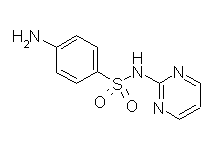
Pharmacokinetics
Absorption: Sulphadiazine has an oral bioavailability is 100%, pre-systemic (first-pass) metabolism accounts for 25.5% (±12.5%).
Distribution: Sulphadiazine has a volume of distribution is 0.36 l/kg. plasma protein binding is 20 - 55%.
Elimination: it is metabolised via Hepatic, plasma half-life is 7 - 12 hr.
Advertisement
Indications
Sulphadiazine is primarily indicated in conditions like Chancroid, GI infections, Malaria, Nocardiosis, Pneumonia, Prevention of rheumatic fever recurrence, Respiratory tract infections, Superficial infections, Toxoplasmosis, Urinary tract infection.
Sulphadiazine is also indicated for secondary conditions like Rheumatic fever.
Contraindications
Sulphadiazine is contraindicated in conditions like Renal failure, Porphyrias, Hepatic failure, G6pd deficiency.
Dosage
Sulphadiazine's dosage details are as follows:
| Dose | Single Dose | Frequency | Route | Instructions |
|---|---|---|---|---|
| Adult Dosage | ||||
| 0.75 g | 0.75 g | Every 6h | PO | In Conjuction with pyrimethamine 25mg/day and with suplemental folinic acid. Doses could be given 2-4g/day in 3-6 divided doses. |
| Paediatric Dosage (20kg) | ||||
| 25 mg/kg | 25 mg/kg | Every 6h | Oral | Maintenance after 2 day IV maintenance doses |
| 37.5 mg/kg | 37.5 mg/kg | Every 6h | Oral | |
| 25 mg/kg | 25 mg/kg | Every 6h | Slow IV | Maintenance for 2 Days |
| 50 mg/kg | 50 mg/kg | Every 6h | Slow IV | Initial |
| Neonatal Dosage (3kg) | ||||
| 25 mg/kg | 25 mg/kg | Every 6h | Oral | Maintenance after 2 day IV maintenance doses |
| 37.5 mg/kg | 37.5 mg/kg | Every 6h | Oral | |
| 25 mg/kg | 25 mg/kg | Every 6h | Slow IV | Maintenance for 2 Days |
| 50 mg/kg | 50 mg/kg | Every 6h | Slow IV | Initial |
Drug Interactions
Always consult your physician for the change of dose regimen or an alternative drug of choice that may strictly be required.
Side Effects
Sulphadiazine in overdosage may give rise to further complications which include Nephrotic syndrome , Serum sickness like illness , Granulocytopenia .
Sulphadiazine produces potentially life-threatening effects which include Stevens Johnson syndrome. Careful monitoring is needed with proper medical management.
The signs and symptoms that are produced after acute overdosage of Sulphadiazine are Crystalluria .
Sulphadiazine is known to cause more or less tolerable side effects which are usually transient. These include Dizziness, Headache, Nausea, Rashes , Vomiting .
Warnings / Precautions
Interference in Pathology
Sulphadiazine may interfere in the diagnosis of Berthertol Method for estimations of Blood Urea - False Raised Results .
Available Brands
Click on a strength to view available brands.
Multi-Ingredient Combinations
Storage Conditions
Drug Classification
- 1.6.2.2.8 — Sulphonamides and trimethoprim