
Sodium Valproate
Also known as: Divalprex Sodium
Sodium Valproate is anticonvulsant drug. It acts by potentiating GABA , an inhibitory neurotransmitter. Sodium Valproate is a drug of choice in all forms of epilepsy. Sodium Valproate is also used as the free acid i.e valproic acid, that was found to have an antiepileptic properties when used as a solvent in the search for other antiepileptic drug and Sodium Valproate is licensed for the acute manic attacks associated with bipolar disorders. The amides and esters of valproic acid are also active antileptic agents.
Primary Characteristics
Sodium Valproate is also known as Divalprex Sodium.
It is of Synthetic origin and belongs to Valproic Acid.
It belongs to Na-Channel Antagonist pharmacological group on the basis of mechanism of action.
Molecular Weight: 166.2 · pKa: 4.95 · Solubility in Water: 1:5 · Solubility in Alcohol: 1:5 · Non-proprietary name: Sodium Valproate.
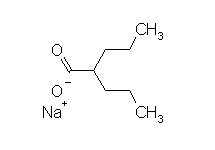
Pharmacokinetics
Absorption: Sodium Valproate has an oral bioavailability is 97% (±2%), pre-systemic (first-pass) metabolism accounts for 35.5% (±4.5%).
Distribution: Sodium Valproate has a volume of distribution is 0.1 - 0.41 l/kg. plasma protein binding is 80 - 94 %.
Elimination: it is metabolised via Hepatic, plasma half-life is 9 - 21 hr, renal excretion is > 1 - 3 %.
Advertisement
Indications
Sodium Valproate is primarily indicated in conditions like All forms of epilepsy, Generalised epilepsy with absence seizures, Prophylaxis of febrile convulsion, Prophylaxis of post traumatic epilepsy, Status epilepticus.
Sodium Valproate is also indicated for secondary conditions like Alcohol withdrawal, Mania, Nelsons syndrome, Tardive dyskinesias.
Contraindications
None recorded.
Dosage
Sodium Valproate's dosage details are as follows:
| Dose | Single Dose | Frequency | Route | Instructions |
|---|---|---|---|---|
| Adult Dosage | ||||
| 1.5 g | 1.5 g | Every 12h | PO | As maintenance dose. |
| 1.5 g | 1.5 g | Every 12h | PO | As maintenance dose. |
| 600 mg | 600 mg | — | PO | should be given in two divided doses. Take after food as starting dose. Increase gradually to maintenance dose. |
| Paediatric Dosage (20kg) | ||||
| 20 – 30 mg/kg | — | Every 24h | Oral | Maintenance doses , exceed upto 35mg/kg |
| 0 – 400 mg | — | Every 24h | Oral | initial daily dose for children weighing more than 20 kg ,should be given in two divided doses |
| 20 – 40 mg/kg | — | Every 24h | Oral | initial daily dose for children weighing less han 20 kg ,should be given in two divided doses |
| 9 mg/kg | 9 mg/kg | — | Slow IV | over 3-5 minutes, maximum upto 2.5g, |
| Neonatal Dosage (3kg) | ||||
| 9 mg/kg | 9 mg/kg | Every 8h | Intravenous | |
| 9 mg/kg | 9 mg/kg | Every 8h | Oral | |
Drug Interactions
Always consult your physician for the change of dose regimen or an alternative drug of choice that may strictly be required.
Side Effects
Sodium Valproate in overdosage may give rise to further complications which include Thrombocytopenia .
Sodium Valproate produces potentially life-threatening effects which include Pancreatitis , Liver damage, Extrapyrimidal symptoms, Hyperammonemia. Careful monitoring is needed with proper medical management.
The signs and symptoms that are produced after acute overdosage of Sodium Valproate are Deepening coma, Death .
Sodium Valproate is known to cause more or less tolerable side effects which are usually transient. These include bone marrow depression, curly hair development, GI disorders, Hair loss, Hematological disorder, Leucopenia, nocturnal enuresis, Tremor, Weight gain.
Warnings / Precautions
Interference in Pathology
Sodium Valproate may interfere in the diagnosis of False +ve test for ketones by Urine Analysis .
Available Brands
Click on a strength to view available brands.
Single Ingredient
Multi-Ingredient Combinations
Storage Conditions
Drug Classification
- 1.5 — Anticonvulsants and Antiepileptics
- 2.7.2 — Migraine prophylaxis
- 3.24.2.2 — Drugs used in bipolar disorders