
Ranitidine
Ranitidine is a histamine H-2 receptor antagonist similar to cimetidine and famotidine. Competitively inhibits the binding of histamine to receptors on gastric parietal cells (designated as the H-2 receptor), thus reducing basal and nocturnal gastric acid secretion. It also decreases the amount of gastric acid released in response to stimuli such as food, caffeine, insulin etc. Ranitidine is 5-12 times as potent as cimetidine as a histamine receptor antagonist while having less affinity than cimetidine for the cytochrome hepatic enzyme system. As a result, ranitidine is much less likely than cimetidine to interact with other drugs, although drug interactions with ranitidine do exist. Similar to other H2-receptor antagonists, the main use of ranitidine is in the treatment of gastrointestinal disorders. In June 1983 ranitidine was approved by the FDA for use in managemnt of duodenal ulcer and hypersecretory states. Ranitidine is administered orally and by intravevous injection or infusion. <BR>Ranitidine Bismuth Citrate (also known as Ranitidine Bismutrex) is a complex of ranitidine with bismuth and citrate, which releases ranitidine and bismuth in the gastro-intestinal tract and therefore possesses both the actions of the bismuth compounds and of ranitidine. Ranitidine Bismuth Citrate is used in the management of peptic ulcer disease and may also be given in combination with antibiotics for the eradication of Helicobacter pylori infection.
Primary Characteristics
Ranitidine is also known as Ranitidine Bismutrex, Ranitidine Bismuth Citrate, Ranitidine HCl.
It is of Synthetic origin and belongs to Furanyl Amine.
It belongs to H2-antagonist pharmacological group on the basis of mechanism of action. It is also classified under Histamine (H-2) Antagonists .
Molecular Weight: 350.9 · pKa: 2.3, 8.2 · Solubility in Water: > 1 in 10 · Non-proprietary name: Ranitidine.
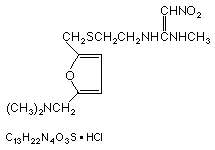
Pharmacokinetics
Absorption: Ranitidine has an oral bioavailability is 102% (±5%).
Distribution: Ranitidine has a volume of distribution is 1-2 l/kg. plasma protein binding is 15%.
Elimination: plasma half-life is 2-3 hr, renal excretion is 80-85%.
Advertisement
Indications
Ranitidine is primarily indicated in conditions like Benign gastric and duodenal ulceration, Benign gastric ulcer, Chronic episodic dyspepsia, Duodenal ulcer, Duodenal ulceration, Duodenal ulceration associated with H. Pylori, Gastric acid reduction (surgical procedures), Gastric acidity, Gastro-oesophageal reflux disease, Heart burn, Long-term treatment of healed gastro-oesophageal reflux disease, NSAID-associated ulceration, Peptic ulcer, Post-operative ulcer, Prophylaxis of acid aspiration in obstetric patients, Prophylaxis of NSAID-associated gastric or duodenal ulcer, Prophylaxis of NSAID-induced duodenal ulcer, Prophylaxis of NSAID-induced ulcer, Prophylaxis of recurrent haemorrhage, Prophylaxis of stress ulceration, Reflux oesophagitis, Zollinger-ellison syndrome.
Ranitidine is also indicated for secondary conditions like Helicobacter pylori infection, Long-term treatment of healed reflux oesophagitis, Long-term treatment of reflux oesophagitis, Moderate to severe reflux oesophagitis, Prophylaxis of acid aspiration in obstetrics, Prophylaxis of mendelson's syndrome, Surgical procedures.
Contraindications
Ranitidine is contraindicated in conditions like Porphyria, Hypersensitivity, Pregnancy, Breast feeding, Pain and inflammation (rheumatic disease).
Dosage
Ranitidine's dosage details are as follows:
| Dose | Single Dose | Frequency | Route | Instructions |
|---|---|---|---|---|
| Adult Dosage | ||||
| 150 mg | 150 mg | Every 8h | PO,IV,IM | |
| Paediatric Dosage (20kg) | ||||
| 0.75 mg/kg | 0.75 mg/kg | Every 6h | Intramuscular | |
| 0.75 mg/kg | 0.75 mg/kg | Every 6h | Intravenous | |
| Neonatal Dosage (3kg) | ||||
| 0.5 mg/kg | 0.5 mg/kg | Every 6h | Intravenous | |
Drug Interactions
Always consult your physician for the change of dose regimen or an alternative drug of choice that may strictly be required.
Side Effects
Ranitidine in overdosage may give rise to further complications which include Thrombocytopenia , Hepatitis , Stevens johnson syndrome , Bradycardia , Hepatomegaly , AV-block , Pancytopenia , Marrow hypoplasia , Leucopenia, Acute pancreatitis .
Ranitidine is known to cause more or less tolerable side effects which are usually transient. These include Agitation , Anaphylactic shock, Arthralgia, Confusion, Constipation , Darkening of stool and tongue, Depression, Diarrhea, Dizziness, Dysuria, Erythema, Fever, Gynecomastia, Hallucination , Headache, Impotence, Nausea, Rashes , Tiredness .
Warnings / Precautions
Interference in Pathology
Ranitidine may interfere in the diagnosis of Liver Function Test (LFT) .
Available Brands
Storage Conditions
Drug Classification
- 1.17.1.2 — Anti-peptic ulcerants
Manufacturers
Manufacturers of Ranitidine in Pakistan: