
Prochlorperazine
Also known as: Chlormeprazine, Prochlorpemazine
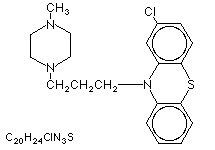
Prochlorperazine is a piperazine phenothiazine, is an oral and parenteral antiemetic and antipsychotic agent. Prochlorperazine is most closely related to chlorpromazine. Prochlorperazine is mainly used for the management of nausea and vomiting but it shares many of the actions and adverse effects of the antipsychotics. It was approved by the FDA in 1956. an antiemetic drug and used to prevent nausea and vomiting. it blocks postsynaptic dopamine receptors in the mesolimbic system and increases dopamine turnover by blockade of the D2 receptor. The decrease in dopamine neurotransmission has been found to correlate with the antipsychotic effects. Dopamine blockade in the chemoreceptor trigger zone accounts for the antiemetic effects. It possesses moderate anticholinergic and alpha-adrenergic receptor blocking effects. Blockade of alpha-I adrenergic receptors produces sedation; muscle relaxation; and cardiovascular effects such as hypotension, reflex tachycardia, and minor changes in ECG patterns.
Primary Characteristics
Prochlorperazine is also known as Chlormeprazine, Prochlorpemazine.
It is of Synthetic origin and belongs to Phenothiazine.
It belongs to D2 antagonist pharmacological group on the basis of mechanism of action and also classified in Antipsychotic Agent pharmacological group. It is also classified under Antiemetic/Antivertigo Agents .
Molecular Weight: 373.9 · pKa: 8.1 · Solubility in Water: slight · Solubility in Alcohol: slight · Non-proprietary name: Prochlorperazine.
Pharmacokinetics
Absorption: Prochlorperazine has an pre-systemic (first-pass) metabolism accounts for 73% (±2%).
Distribution: Prochlorperazine has a volume of distribution is 23 l/kg.
Elimination: it is metabolised via Hepatic, plasma half-life is 6.7 +/- 6.8 hr.
Advertisement
Indications
Prochlorperazine is primarily indicated in conditions like Acute pulmonary oedema, Diagnostic procedures, Labyrinthine disorders, Mania, Menieres disease, Muscle spasm of varied aeitology, Nausea and vomiting, Nausea and vomiting (acute attacks), Nausea and vomiting (due to migraine), Nausea and vomiting (prevention), Nausea, vomiting (acute attacks), Psychosis, Schizophrenia and other psychoses, Severe nausea and vomiting (prevention), Severe nausea, vomiting (acute attacks), Severe nausea, vomiting (prevention), Vertigo.
Contraindications
Prochlorperazine is contraindicated in conditions like CNS depression.
Dosage
Prochlorperazine's dosage details are as follows:
| Dose | Single Dose | Frequency | Route | Instructions |
|---|---|---|---|---|
| Adult Dosage | ||||
| 7.5 mg | 7.5 mg | Every 6h | IM | Frequency may be increased uoto 6 times/day if needed. |
| 25 mg | 25 mg | Every 8h | Intra Rectal | |
| 6.25 mg | 6.25 mg | Every 4h | IV | Frequency may be increased uoto 8 times/day if needed. |
| 7.5 mg | 7.5 mg | Every 8h | PO | |
| Paediatric Dosage (20kg) | ||||
| 0.187 mg/kg | 0.187 mg/kg | Every 8h | Intra Muscular | Use with Caution under 10 Kg BW |
| 0.25 mg/kg | 0.25 mg/kg | Every 8h | Intra Rectal | - |
| 0.187 mg/kg | 0.187 mg/kg | Every 8h | Oral | Use with Caution under 10 Kg BW |
| Neonatal Dosage (3kg) | ||||
| No data. | ||||
Drug Interactions
Always consult your physician for the change of dose regimen or an alternative drug of choice that may strictly be required.
Side Effects
Prochlorperazine in overdosage may give rise to further complications which include Extrapyramidal symptoms.
Prochlorperazine produces potentially life-threatening effects which include Bone marrow suppression, Aplastic Anemia . Careful monitoring is needed with proper medical management.
The signs and symptoms that are produced after acute overdosage of Prochlorperazine are Drowsiness, Unconsciousness, Respiratory depression, Fever, Orthostatic hypotension, Syncope , Neuroleptic malignant syndrome, Reflex tachycardia.
Prochlorperazine is known to cause more or less tolerable side effects which are usually transient. These include Amenorrhea, Blurred vision, Constipation , Dry mouth, Ejaculatory failure, Galactorrhea, Glaucoma , Gynecomastia, Hypotension , Impotence, Urinary retensionX.
Warnings / Precautions
Interference in Pathology
Prochlorperazine may interfere in the diagnosis of Measurement of 17 Oxo Steroids and 17-Oxogenic Steroids .
Available Brands
Click on a strength to view available brands.
Single Ingredient
Storage Conditions
Drug Classification
- 1.17.2 — Antiemetics & antinauseants