
Procarbazine
Also known as: Ibenzmethyzim
Procarbazine is oral, cell cycle-phase specific antineoplastic (antineoplastic) agent used in the treatment of Hodgkin's disease, non-Hodgkin's lymphomas, brain tumors, and lung cancers. It has been described as a nonclassic alkylating agent and is not cross-resistant with the other alkylating agents. Today, Procarbazine is used almost exclusively for Hodgkin's disease. It originally was synthesized as a monoamine oxidase inhibitor, and this activity, as well as a disulfiram-like reaction, are part of its unusual adverse effect profile. It was approved by the FDA in 1969. it must be activated by the cytochrome P-450 system to exert its cytotoxic effects. Several active metabolites can form. it's exact mechanism(s) of action is not clear, but the drug appears to have several sites of action in the cell. The drug appears to be most active during S and G1 phase. The cytotoxic effects of it are evident only in cells that are rapidly proliferating and actively synthesizing DNA.
Primary Characteristics
Procarbazine is also known as Ibenzmethyzim.
It is of Synthetic origin and belongs to Amide.
It belongs to DNA Strand Breakage pharmacological group on the basis of mechanism of action and also classified in Antineoplastic Agent, Alkylating Agent pharmacological group.
Molecular Weight: 257.8 · pKa: 6.8 · Solubility in Water: >1 in 10 · Solubility in Alcohol: > 1 in 100 · Non-proprietary name: Procarbazine.
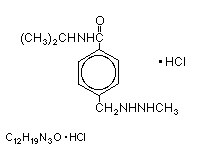
Pharmacokinetics
Absorption: Procarbazine has an oral bioavailability is 95.5% (±4.5%).
Elimination: it is metabolised via Hepatic, plasma half-life is 7 min, renal excretion is 75 %.
Advertisement
Indications
Procarbazine is primarily indicated in conditions like Brain tumors, Hodgkin's disease, Lung cancer, Malignant melanoma, Myeloma, Non-hodgkin's lymphoma, Polycythemia rubravera.
Contraindications
Procarbazine is contraindicated in conditions like Bone marrow depression, Pregnancy, Severe liver impairment, Breast feeding, Adjunct in treatment of opioid dependance.
Dosage
Procarbazine's dosage details are as follows:
| Dose | Single Dose | Frequency | Route | Instructions |
|---|---|---|---|---|
| Adult Dosage | ||||
| 150 mg/ sq.meter | 150 mg/ sq.meter | Every 24h | PO | In div.doses.For 14 days in each treatment cycle |
| Paediatric Dosage (20kg) | ||||
| 125 mg/sq.meter | 125 mg/sq.meter | Every 24h | Oral | For 14 days |
| Neonatal Dosage (3kg) | ||||
| 0 – 0 | — | — | Not used in this age group | |
Drug Interactions
Always consult your physician for the change of dose regimen or an alternative drug of choice that may strictly be required.
Side Effects
Procarbazine in overdosage may give rise to further complications which include Cessation of menstrual function, Azoospermia , Teratogenic effect .
Procarbazine produces potentially life-threatening effects which include Bone marrow suppression, Thrombocytopenia , Carcinogenicity, Myelogenous leukemia. Careful monitoring is needed with proper medical management.
The signs and symptoms that are produced after acute overdosage of Procarbazine are Tremor, Coma, Convulsions .
Procarbazine is known to cause more or less tolerable side effects which are usually transient. These include Alopecia, Anorexia , Arthralgia, Ataxia, Chills, Coma , Convulsions , Diarrhea, Diplopia, Dizziness, Fever, Influenza like syndrome , Insomnia, Lethargy, Myalgia, Nausea and vomiting, nervousness, Nystagmus , Photophobia , Retinal hemorrhage, Stomatitis, Thrombocytopenia.
Warnings / Precautions
Interference in Pathology
Procarbazine may interfere in the diagnosis of Urinanalysis , Hematocrit Value , Complete blood cell count.
Available Brands
Click on a strength to view available brands.
Single Ingredient
Storage Conditions
Drug Classification
- 1.8.2 — Cytotoxic (anti-neoplastic) drugs
Manufacturers
Manufacturers of Procarbazine in Pakistan: