
Procainamide (HCl)
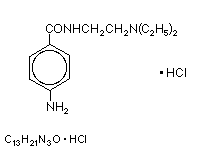
Procainamide(HCl) is a potent class I antiarrhythmic agent used in the treatment of several cardiac arrhythmias including atrial fibrillation, atrial flutter, paroxysmal atrial tachycardia, and ventricular tachycardia. A derivative of the local anesthetic procaine, differs from procaine only in that it conatin an amide structure rather than an ester linkage. This difference protects it from enzymatic hydrolysis resulting in comperatively longer duration of action and less central nervous sytem effects. Procainamide is similar in action to quinidine and disopyramide. It can be administered both orally and parenterally. Procainamide was given FDA approval in 1950 and has been used in clinical medicine since 1951. Procainamide inhibits the influx of sodium through membrane pores. It exerts its effects on "fast" channels of the myocardial cell membrane, prolonging the recovery period after repolarizatio, Thereby decreasing myocardial automaticity, excitability, conduction velocity, and possibly contractility.
Primary Characteristics
It is of Synthetic origin and belongs to Benzamide.
It belongs to Na-Channel Antiarrhythmic antagonist pharmacological group on the basis of mechanism of action and also classified in Anti arrhythmic agents pharmacological group.
Molecular Weight: 271.8 · pKa: 9.2 · Solubility in Water: 1 in 0.25 · Solubility in Alcohol: 1 in 2 · Non-proprietary name: Procainamide (HCl).
Pharmacokinetics
Absorption: Procainamide (HCl) has an oral bioavailability is 82.5% (±7.5%), pre-systemic (first-pass) metabolism accounts for 0.5% (±0.5%).
Distribution: Procainamide (HCl) has a volume of distribution is 2 l/kg. plasma protein binding is 15 %.
Elimination: it is metabolised via Hepatic, plasma half-life is 3 hr, renal excretion is 85 %.
Advertisement
Indications
Procainamide (HCl) is primarily indicated in conditions like Atrial arrhythmias, Cardiac arrhythmia, Prophylaxis of NSAID-induced duodenal ulcer, Sinus rhythm, Ventricular arrhythmias.
Contraindications
Procainamide (HCl) is contraindicated in conditions like Heart failure, Myasthenia gravis, Heart block, Digitalis toxicity.
Dosage
Procainamide (HCl)'s dosage details are as follows:
| Dose | Single Dose | Frequency | Route | Instructions |
|---|---|---|---|---|
| Adult Dosage | ||||
| 50 mg/kg | 50 mg/kg | Every 24h | PO | In div.doses. |
| Paediatric Dosage (20kg) | ||||
| 0.5 mg/kg.hr | 0.5 mg/kg.hr | — | IV Infusion | Maintenance, As Required |
| 8 mg/kg | 8 mg/kg | Every 6h | Oral | - |
| 2 mg/kg | 2 mg/kg | — | Slow IV | Initially repeat every 30 min upto a max of 100 mg |
| Neonatal Dosage (3kg) | ||||
| 0.5 mg/kg.hr | 0.5 mg/kg.hr | — | IV Infusion | Maintenance, As Required |
| 8 mg/kg | 8 mg/kg | Every 6h | Oral | - |
| 2 mg/kg | 2 mg/kg | — | Slow IV | Initially repeat every 30 min upto a max of 100 mg |
Drug Interactions
Always consult your physician for the change of dose regimen or an alternative drug of choice that may strictly be required.
Side Effects
Procainamide (HCl) produces potentially life-threatening effects which include Anemia, Agranulocytosis, Thrombocytopenia , Lupus erythematosus, Neutropenia , Pancytopenia , Leucopenia , Ventricular tachycardia. Careful monitoring is needed with proper medical management.
The signs and symptoms that are produced after acute overdosage of Procainamide (HCl) are Hypotension, Vomiting, Tachycardia , Oliguria.
Procainamide (HCl) is known to cause more or less tolerable side effects which are usually transient. These include Anorexia , Confusion, Convulsions , Depression, Diarrhea, Giddiness, Nausea and vomiting, Taste disturbance.
Warnings / Precautions
Available Brands
Storage Conditions
Drug Classification
- 1.12.2 — Antiarrhythmic drugs