
Ascorbic Acid
Also known as: Vitamin C, Cevitamic acid
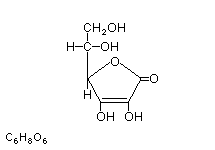
Ascorbic Acid is also known as vitamin C. Ascorbic Acid is a water soluble vitamin. It is structurally related to monosaccharides and exists in nature in both a reduced and the oxidized form, dehydroit. It involves in different body functions. its supplements may be used in persons with chronic illness, burns, or certain blood disorders. Best sources of vitamin C is fresh fruits such as citrus fruits, strawberries, melons and leafy vegetables such as lettuce, cabbage and tomatoes, potatoes and green and red peppers.
Primary Characteristics
Ascorbic Acid is also known as Vitamin C, Cevitamic acid.
It is of Natural origin and belongs to Furanolactone.
It is classified in Vitamin, Water Soluble pharmacological group.
Molecular Weight: 176.1 · pKa: 4.2, 11.6 · Solubility in Water: 1 in 3 · Solubility in Alcohol: 1 in 25 · Non-proprietary name: Ascorbic Acid · pH: 2.2 · Isotonic value: 5.05.
Pharmacokinetics
Absorption: Ascorbic Acid has an oral bioavailability is 82.5% (±2.5%).
Distribution: Ascorbic Acid has a plasma protein binding is Nill.
Elimination: plasma half-life is 16 days, renal excretion is 85%.
Advertisement
Indications
Ascorbic Acid is primarily indicated in conditions like Prevention and treatment of scurvy, Scurvy, Vitamin deficiency.
Contraindications
Ascorbic Acid is contraindicated in conditions like Hyperoxaluria.
Dosage
Ascorbic Acid's dosage details are as follows:
| Dose | Single Dose | Frequency | Route | Instructions |
|---|---|---|---|---|
| Adult Dosage | ||||
| 0 – 0 | — | — | Eye drops 10% | |
| 100 – 1000 mg | — | Every 24h | PO,IV,SC | Frequency may be increased upto twice daily if needed. Dose vary according to requirement. |
| Paediatric Dosage (20kg) | ||||
| 37.5 mg | 37.5 mg | Every 24h | Oral | For Paeds of All Ages |
| Neonatal Dosage (3kg) | ||||
| 4.687 mg/kg | 4.687 mg/kg | Every 24h | oral | |
Drug Interactions
Always consult your physician for the change of dose regimen or an alternative drug of choice that may strictly be required.
Side Effects
Ascorbic Acid in overdosage may give rise to further complications which include Kidney oxalate stones .
Ascorbic Acid produces potentially life-threatening effects which include Failure of conception . Careful monitoring is needed with proper medical management.
The signs and symptoms that are produced after acute overdosage of Ascorbic Acid are Hemolysis in patients with G6PD deficiency, Diarrhea, GI disturbances.
Ascorbic Acid is known to cause more or less tolerable side effects which are usually transient. These include Laxative effect.
Warnings / Precautions
Interference in Pathology
Ascorbic Acid may interfere in the diagnosis of False positive reactions in certain tests for glucose, uric acid, creatinine & occult blood , Falsely elevated or false negative test results may be obtained from plasma, feces or urine samples.
Available Brands
Click on a strength to view available brands.
Single Ingredient
Multi-Ingredient Combinations
Storage Conditions
Drug Classification
- 1.27 — Vitamins, minerals, tonics, and other susbstances
Manufacturers
Manufacturers of Ascorbic Acid in Pakistan: