
Aspirin
Also known as: Acetyl salicylicacid
Aspirin is an NSAID (non-steroidal anti-inflammatory drug). It has anti-infalammatory, analgesic, antipyretic and antithrombotic activity. It interferes with prostaglandin synthesis by irreversibly inhibiting cyclooxygenase. It was synthesized in 1853, but the drug was not in use until 1899, when it was found to be effective in the arthritis and well tolerated. The name it was coined from the German word for the compound, acetylspirsaure. Because of its greater efficacy and lower cost, it rapidly replaced the natural products in use at that time, and has remained one the most widely employed remedies for over 90 years.
Primary Characteristics
Aspirin is also known as Acetyl salicylicacid.
It is of Synthetic origin and belongs to Benzoic Acid.
It belongs to Cyclo-oxygenase inhibitor pharmacological group on the basis of mechanism of action and also classified in Salicylate pharmacological group. It is also classified under Analgesics and Anti-inflammatory Agents .
Molecular Weight: 180 · pKa: 3.5 · Solubility in Water: 1 in 300 · Solubility in Alcohol: 1 in 5 · Non-proprietary name: Aspirin.
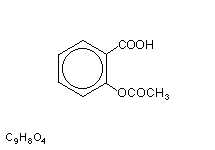
Pharmacokinetics
Absorption: Aspirin has an oral bioavailability is 85% (±5%), pre-systemic (first-pass) metabolism accounts for 72.5% (±2.5%).
Distribution: Aspirin has a volume of distribution is 0.2 l/kg. plasma protein binding is 80-90%.
Elimination: it is metabolised via Hepatic, plasma half-life is 15-20 min, renal excretion is major.
Advertisement
Indications
Aspirin is primarily indicated in conditions like Fever, Following coronary bypass surgery, Headache, Inflammation, Ischaemic event (unstable angina, myocardial infarction), Mild to moderate pain, Myocardial infarction, Myocardial infarction prophylaxis, Pain and inflammation (in rheumatic disease, in other musculoskeletal disorders), Prophylaxis of cerebrovascular disease, Pyrexia, Stable angina, Stable angina pectoris, Stroke prophylaxis.
Aspirin is also indicated for secondary conditions like Arterial thromboembolism prophylaxis, Colorectal carcinoma prophylaxis, Juvenile rheumatoid arthritis, Neurogenic bladder, Osteoarthritis.
Contraindications
Aspirin is contraindicated in conditions like GI ulceration, Hypoprothrombinemia, Hypersensitivity.
Dosage
Aspirin's dosage details are as follows:
| Dose | Single Dose | Frequency | Route | Instructions |
|---|---|---|---|---|
| Adult Dosage | ||||
| 45 mg/kg/d | 45 mg/kg/d | — | PO | for inflammation |
| 200 mg | 200 mg | Every 1h | PO | Prophylaxis of MI, stable angina, and cerebro-vascular disease. |
| 600 mg | 600 mg | Every 4h | PO | Mild to moderate pain, pyrexia, migraine, and dysmenorrhea. |
| 750 mg | 750 mg | Every 4h | suppositories | upto 3.6g |
| Paediatric Dosage (20kg) | ||||
| 62.5 mg/kg | 62.5 mg/kg | Every 6h | Oral | As Required |
| Neonatal Dosage (3kg) | ||||
| No data. | ||||
Drug Interactions
Always consult your physician for the change of dose regimen or an alternative drug of choice that may strictly be required.
Side Effects
Aspirin in overdosage may give rise to further complications which include Rhinitis , Hepatitis , Angioneurotic edema, Gi bleeding , Urticaria , Hepatomegaly .
Aspirin produces potentially life-threatening effects which include Cerebral hemorrhage, Airway obstruction, Gastric ulceration, Gastric erosion. Careful monitoring is needed with proper medical management.
The signs and symptoms that are produced after acute overdosage of Aspirin are Coma, Acidosis, Hyperventilation, Hyperthermia, Renal failure, Vertigo , Hyperkalemia, Cardiovascular collapse, Volume depletion, Hyperglycemia, Tinnitus .
Aspirin is known to cause more or less tolerable side effects which are usually transient. These include Asthma, Bleeding , Dizziness, Dyspepsia , Epigastric discomfort, Nausea, Respiratory alkalosis, Tinnitus, Vertigo, Vomiting .
Warnings / Precautions
Interference in Pathology
Aspirin may interfere in the diagnosis of Urine tests for Catecholamines, dopa, glucose, ketones, hippuric acid , Pregnancy tests carried out on urine , Plasma/Serum tests for albumin, barbiturates, calcium, propylthiouracil, tyrosine & uric acid , Thyroid Function Test, Urine tests for homogentisic acid & homavanillic acid , Urine tests for 17-hydroxycorticosteroids & 5-hydroxyindoleacetic acid. , hippuric acid,, serum / plasma albumin, calcium, propylthiouracil, tyrosine and uric acid.
Available Brands
Storage Conditions
Drug Classification
- 1.2.1.1 — Acetyl salicylic acid
- 2.7.1 — Acute migraine attack
- 3.10.2 — Anticoagulants/Platelet deaggregators
- 4.12.5 — Anti-thrombotic drugs and myocardial infarction
Manufacturers
Manufacturers of Aspirin in Pakistan: