
Oxytocin
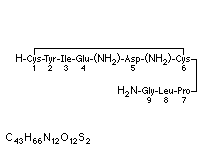
Oxytocin is a naturally occuring nonapeptide hormone secreted by the posterior pituitary. It can be extracted from pituitary glands of larger mammals and Oxytocin is prepared commercially by chemical synthesis. It binds to specific receptors in the uterus causing uterine contraction, perticularly when oestrogen levels are high, this action make it useful in the induction of labour when medically mediated. Oxytocin is also used to facilitate the milk-ejection reflex. Oxytocin is given parentrally.
Primary Characteristics
It is of Synthetic origin and belongs to Nonapeptide.
It belongs to Oxytocin agonist pharmacological group on the basis of mechanism of action. It is also classified under Posterior Pituitary Hormones .
Molecular Weight: 1007 · Solubility in Water: soluble · Non-proprietary name: Oxytocin.
Pharmacokinetics
Distribution: Oxytocin has a volume of distribution is 0.3 l/kg.
Elimination: it is metabolised via Hepatic, plasma half-life is 2-10 min.
Advertisement
Indications
Oxytocin is primarily indicated in conditions like Duodenal ulcer, Induction of labour, Inevitable abortion, Labor augmentation, Lactation induction, Moderately emetognic chemotherapy or radiotherapy, Postpartum haemorrhage, Postpartuum haemorrhage, Prevention of postpartum haemorrhage, Second trimester intra-uterine death, Severe nausea and vomiting, Uterine atonia.
Contraindications
Oxytocin is contraindicated in conditions like Obstetric, Uterine hyperactivity, Placenta previa.
Dosage
Oxytocin's dosage details are as follows:
| Dose | Single Dose | Frequency | Route | Instructions |
|---|---|---|---|---|
| Adult Dosage | ||||
| 7.5 IU/min | 7.5 IU/min | — | IV Inf | IV drip inf. of the 5% of D/W containing 1 IU Oxytocin per 100ml, Initial Inf. rate of 1-4 mU/min may be gradually increased upto max. 20mU/min |
| Paediatric Dosage (20kg) | ||||
| 0 – 0 | — | — | Not used in children | |
| Neonatal Dosage (3kg) | ||||
| 0 – 0 | — | — | Not used in this age group | |
Drug Interactions
Always consult your physician for the change of dose regimen or an alternative drug of choice that may strictly be required.
Side Effects
Oxytocin in overdosage may give rise to further complications which include Hypoxia , Reflex tachycardia , Anaphylaxis , Hypotension , Sinus bradycardia , Neonatal jaundice , Hematoma.
Oxytocin produces potentially life-threatening effects which include Maternal water intoxication, Tetanic uterine contraction. Careful monitoring is needed with proper medical management.
The signs and symptoms that are produced after acute overdosage of Oxytocin are Uncontrolled uterine contractions, Decreased placental blood flow, Fetal asphyxia.
Oxytocin is known to cause more or less tolerable side effects which are usually transient. These include Nasal irritation, Nausea, Rhinorrhea, Vomiting .
Warnings / Precautions
Available Brands
Storage Conditions
Drug Classification
- 1.22.1.1 — Oxytocics