
Oxytetracycline (Dihydrate)
Also known as: Glomycin, Hydroxytetracycline, Riomitsin, Terrafungine +1 more
Oxytetracycline (Dihydrate) is a naturally occuring tetracycline, produced by Streptomyces rimosis. Like other tetracycline it has a broad spectrum of activity.it was introduced in 1950. Effective against a wide range of both gram positive and gram negative organisms.The main mechanism of action is on protien synthesis. In addtion to its antibiotic activity Oxytetracycline (Dihydrate) is also a chelating agent and will chelate Ca, Mg or Al ions in the gut. Oxytetracycline (Dihydrate) is administered orally and intramuculalrly. Antibiotics require constant drug level in body for therapeutic effect. This is achieved by taking the drug at regular intervals of time throughout the day and night as prescribed. Oxytetracycline (Dihydrate) is important to take the drug for the full time period as prescribed. Discontinuation of the drug may result in ineffective treatment.
Primary Characteristics
Oxytetracycline (Dihydrate) is also known as Glomycin, Hydroxytetracycline, Riomitsin, Terrafungine, Oxytetracycline , Oxytetracycline HCL.
It is of Semi Synthetic origin and belongs to Tetracycline.
It belongs to Antibacterial (Proetin synthesis inhibitor) pharmacological group on the basis of mechanism of action and also classified in Antibiotic, Tetracycline Derivative pharmacological group.
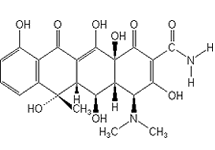
Molecular Weight: 496.5 · pKa: 3.3, 3.7, 9.1 · Solubility in Water: < 1 in 4000 · Solubility in Alcohol: 1 in 80 · Non-proprietary name: Oxytetracycline (Dihydrate).
Pharmacokinetics
Absorption: Oxytetracycline (Dihydrate) has an oral bioavailability is 60%, pre-systemic (first-pass) metabolism accounts for 0.5% (±0.5%).
Distribution: Oxytetracycline (Dihydrate) has a volume of distribution is 406.6 l/kg. plasma protein binding is 31%.
Elimination: it is metabolised via Hepatic, plasma half-life is 9.2 hr, renal excretion is 22.5%.
Advertisement
Indications
Oxytetracycline (Dihydrate) is primarily indicated in conditions like Acne, Actinomycotic mycetoma, Amoebic dysentry, Biliary tract infections, Brucellosis, Chlamydial infections, Cholera, Fever, Gonorrhoea, Malaria, Melioidosis, Pneumonia, Q Fever, Respiratory tract infections, Rickettsiae, Rosacea, Syphilis, Urinary tract infection, Whipple's disease.
Oxytetracycline (Dihydrate) is also indicated for secondary conditions like Acne rosacea, Acne vulgaris, Long-term treatment of healed gastro-oesophageal reflux disease.
Contraindications
Oxytetracycline (Dihydrate) is contraindicated in conditions like Systemic lupus erythematosus.
Dosage
Oxytetracycline (Dihydrate)'s dosage details are as follows:
| Dose | Single Dose | Frequency | Route | Instructions |
|---|---|---|---|---|
| Adult Dosage | ||||
| 375 mg | 375 mg | Every 6h | PO | |
| Paediatric Dosage (20kg) | ||||
| 0 – 0 | — | — | — | Not Recommended in Children under 12 Years |
| Neonatal Dosage (3kg) | ||||
| 0 – 0 | — | — | Not recommended in this age group | |
Drug Interactions
Always consult your physician for the change of dose regimen or an alternative drug of choice that may strictly be required.
Side Effects
Oxytetracycline (Dihydrate) in overdosage may give rise to further complications which include Renal failure .
Oxytetracycline (Dihydrate) produces potentially life-threatening effects which include Staphylococcal enterocolitis, Fluminating diarrhea. Careful monitoring is needed with proper medical management.
The signs and symptoms that are produced after acute overdosage of Oxytetracycline (Dihydrate) are Vomiting, Coma.
Oxytetracycline (Dihydrate) is known to cause more or less tolerable side effects which are usually transient. These include Anorexia , Bulging of fontanelle, Diarrhea, Dysphagia, Enterocolitis , Erythematous rash, Esophageal ulceration, Esophagitis, Leukopenia, Maculopapular rash, Nausea.
Warnings / Precautions
Interference in Pathology
Oxytetracycline (Dihydrate) may interfere in the diagnosis of Hingerty method for Urinary Catecholamine Measurements , Urinary Urobilinogen Excretion Test Levels .
Available Brands
Storage Conditions
Drug Classification
- 1.6.2.2.3 — Tetracyclines