
Ondansetron (HCl)
Ondansetron (HCl) is oral and parenteral antiemetic agent. Ondansetron (HCl) is the first selective serotonin blocking agent to be marketed. Ondansetron (HCl) is extremely safe and highly effective antiemetic that has greatly improved the ability to give chemotherapy. The quality of life of patients has been tremendously better with ondansetron than with older, traditional antiemetics. Despite its effectiveness, ondansetron is not recommended for the routine treatment of nausea due to its significant cost. Ondansetron was originally approved for the treatment of chemotherapy-induced nausea/vomiting by the FDA in January 1991 and tablets were approved for the treatment of post-operative nausea/vomiting in April 1995. It may have central and/or peripheral action, selectively blocks the serotonin 5-HT1 receptors. 5-HT 1receptors are found centrally in the chemoreceptor trigger zone and peripherally at vagal nerve terminals in the intestines.
Primary Characteristics
It is of Synthetic origin and belongs to Imidazole.
It is classified in Selective 5-HT3 Receptor Antagonist pharmacological group. It is also classified under Antiemetic/Antivertigo Agents .
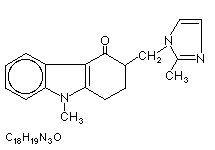
Molecular Weight: 365.8 · pKa: 7.4 · Solubility in Water: 1 in 3 · Non-proprietary name: Ondansetron (HCl).
Pharmacokinetics
Absorption: Ondansetron (HCl) has an oral bioavailability is 29.5% (±29.5%), pre-systemic (first-pass) metabolism accounts for 73% (±2%).
Distribution: Ondansetron (HCl) has a volume of distribution is 163 ± 25 litre. plasma protein binding is 70-76%.
Elimination: it is metabolised via extensive by Liver, plasma half-life is 3.3 ± 0.8 hr, renal excretion is < 10%.
Advertisement
Indications
Ondansetron (HCl) is primarily indicated in conditions like Moderately emetognic chemotherapy or radiotherapy, Nausea and vomiting (chemotherapy induced), Post operative vomiting, Post-operative nausea, Post-operative nausea and vomiting, Prevention of post-operative nausea and vomiting, Severely emetognic chemotherapy.
Contraindications
Ondansetron (HCl) is contraindicated in conditions like Hypersensitivity.
Dosage
Ondansetron (HCl)'s dosage details are as follows:
| Dose | Single Dose | Frequency | Route | Instructions |
|---|---|---|---|---|
| Adult Dosage | ||||
| 8 mg | 8 mg | Every 12h | Oral | 2 hour before treatment |
| 24 mg | 24 mg | Every 8h | PO | Oral dose is recommended 30 min before start of sinle day chemothrophy. |
| 16 mg | 16 mg | — | Rectally | 1 to 2 hour before treatment |
| 8 mg | 8 mg | Every 4h | Slow IV/IM | Max. Dose =32 mg. Give 30 Min. before emetogenic drugs. |
| Paediatric Dosage (20kg) | ||||
| 5 mg/m2 | 5 mg/m2 | — | IV Infusion | Initially for 15 Min (Rec. for 5-12 Yrs) |
| 4 mg | 4 mg | Every 2h | Oral | Maintenance for 5 Days |
| Neonatal Dosage (3kg) | ||||
| No data. | ||||
Drug Interactions
Always consult your physician for the change of dose regimen or an alternative drug of choice that may strictly be required.
Side Effects
Ondansetron (HCl) in overdosage may give rise to further complications which include Cardiac arrhythmias, Bronchospasm , Cardiac arrhythmias , Bradycardia , Bronchospasm , Angioedema , Angina , Angioedema , Hyperbilirubinemia.
The signs and symptoms that are produced after acute overdosage of Ondansetron (HCl) are Constipation, Dizziness, Headache.
Ondansetron (HCl) is known to cause more or less tolerable side effects which are usually transient. These include Abdominal pain, Chills, Constipation , dizziness, Dyspnea, Fever, Flushing, Headache, Hiccups, Hypotension , Reaction at injection site, Vision disturbances, Warmth sensation, Xerostomia .
Warnings / Precautions
Interference in Pathology
Ondansetron (HCl) may interfere in the diagnosis of No technical interferance have been reported.
Available Brands
Storage Conditions
Drug Classification
- 1.17.2 — Antiemetics & antinauseants