
Omeprazole
Also known as: Proton pump Inhibitor
Omeprazole is a an oral antiulcer agent. Omeprazole is characterized as a gastric acid pump inhibitor because it blocks the final step of gastric acid production. It has a long duration of action and is very potent, allowing for once-daily administration. Despite its potency, it must be used in combination with antibiotics to be effective against Helicobacter pylori. Due to concern regarding long-term use, it was originally approved by the FDA in September 1989 for acute treatment only. In December 1994, an FDA advisory committee recommended it be approved for maintenance therapy of healed erosive esophagitis. In April 1996, it was approved for the treatment of H. pylori-associated duodenal ulcer. Belongs to a new class of antisecretory agents, the substituted benzimidazoles, which suppress gastric acid secretion by inhibiting the H+/K+ ATPase enzyme system of parietal cells. it, following activation in an acidic pH, binds irreversibly to the H+/K+ ATPase pump on the secretory surface of the parietal cell membrane. Subsequently, the secretion of hydrogen ions into the gastric lumen is inhibited. it inhibits both basal and stimulus-induced acid secretion.
Primary Characteristics
Omeprazole is also known as Proton pump Inhibitor.
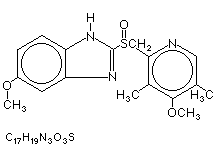
It is of Synthetic origin and belongs to Benzimidazol.
It belongs to H/K Atpase proton pump inhibitor pharmacological group on the basis of mechanism of action. It is also classified under Antacids .
Molecular Weight: 345.4 · pKa: 4.0, 8.7 · Solubility in Water: 1 in 7700 · Solubility in Alcohol: 1 in 25 · Non-proprietary name: Omeprazole.
Pharmacokinetics
Absorption: Omeprazole has an oral bioavailability is 57.5% (±7.5%), pre-systemic (first-pass) metabolism accounts for 20%.
Distribution: Omeprazole has a volume of distribution is 0.3 - 0.4 l/kg. plasma protein binding is 95%.
Elimination: it is metabolised via Hepatic, plasma half-life is 1 hr, renal excretion is 80%.
Advertisement
Indications
Omeprazole is primarily indicated in conditions like Acid reflux disease (long-term management), Benign gastric and duodenal ulceration, Benign gastric and duodenal ulcers, Benign gastric ulcer associated with H.pylori, Duodenal errosions, Duodenal or benign gastric ulcer associated with H.pylori, Duodenal ulcer, Duodenal ulcer associated with h. Pylori, Gastric acid reduction during anaesthesia, Gastric acid reduction during general anaesthesia, Gastric ulcer, Gastro-esophageal reflux disease, Gastro-oesophageal reflux disease, Gastro-oesophageal reflux disease (refractory to other treatment), Maintenance of recurrent duodenal ulcers, Non-ulcer dyspepsia, NSAID-associated gastric and duodenal ulcers, NSAID-associated gastric and duodenal ulcers (prophylaxis), NSAID-associated gastric and duodenal ulcers and duodenal errosions, NSAID-associated gastric or duodenal ulcers, NSAID-associated gastric or duodenal ulcers (prophylaxis), Prevention of relapse in duodenal ulcer, Prophylaxis for NSAID-associated gastric and duodenal ulcers, Prophylaxis of acid aspiration, Reflux oesophagitis, Resistant ulcers, Severe or recurrent duodenal and gastric ulcertion, Zollinger-ellison syndrome.
Omeprazole is also indicated for secondary conditions like Acid aspiration syndrome prevention, GI bleeding.
Contraindications
None recorded.
Dosage
Omeprazole's dosage details are as follows:
| Dose | Single Dose | Frequency | Route | Instructions |
|---|---|---|---|---|
| Adult Dosage | ||||
| 20 – 40 mg | — | Every 24h | PO | For 4 weeks. |
| Paediatric Dosage (20kg) | ||||
| No data. | ||||
| Neonatal Dosage (3kg) | ||||
| No data. | ||||
Drug Interactions
Always consult your physician for the change of dose regimen or an alternative drug of choice that may strictly be required.
Side Effects
Omeprazole in overdosage may give rise to further complications which include Interstitial nephritis .
Omeprazole produces potentially life-threatening effects which include Anaphylaxis . Careful monitoring is needed with proper medical management.
The signs and symptoms that are produced after acute overdosage of Omeprazole are Tachycardia , Drowsiness, Drowsiness, Headache.
Omeprazole is known to cause more or less tolerable side effects which are usually transient. These include Abdominal pain, Agitation , Arthralgia, Constipation , Depression, Diarrhea, Dizziness, Dry mouth, Fatigue, Flatulence, Gynecomastia, Headache, Impotence, Insomnia, Myalgia, Myopathy, Nausea, Photosensitivity, Pruritus , Skin rash, Urticaria.
Warnings / Precautions
Available Brands
Storage Conditions
Drug Classification
- 1.17.1.2 — Anti-peptic ulcerants
Manufacturers
Manufacturers of Omeprazole in Pakistan: