
Ampicillin
Also known as: Aminobenzyl Penicilline, Ampicillin Trihydrate
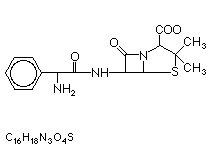
Almost 70 years ago, Alexander Fleming reported his discovery of penicillin in 1929. Chain, Flory and their associates succeeded in producing significant quantities of the first penicillins from the cultures of Penicillium notatum in 1940. Ten years later virtually unlimited quantities of penicillin G were available for clinical use. Penicillin is derived directly or indirectly from strains of fungi of the genus Penicillium and other soil inhibiting fungi grown on special culture media. Penicillins are active against most bacteria especially gram positive pathogen (streptococci, staphylococci, pneumococci), some negative starins (gonococci, meningoccocci), some spirochetes and some fugi. The structure of penicillin consists of a thiazolidine ring connected to a ß lactam ring, which is attached to a side chain. Ampicillin is a semisynthetic pencillin derived from the basic penicillin nucleus 6-aminopenicillanic acid. Ampicillin is a bactericidal penicillin and effective against a variety of gram positive and gram negative bacteria. Antibiotics require constant drug level in body for therapeutic effect.it inhibits bacterial cell wall synthesis by binding to one or more of the penicillin binding proteins (PBPs) This is achieved by taking the drug at regular intervals of time throughout the day and night as prescribed. Ampicillin is important to take the drug for the full time period as prescribed. If you discontinue the drug it may result in ineffective treatment. Ampicillin is effective against typhoid fever.
Primary Characteristics
Ampicillin is also known as Aminobenzyl Penicilline, Ampicillin Trihydrate, Ampicillin Sodium.
It is of Semi Synthetic origin and belongs to Penicillanic Acid.
It belongs to Peptidoglycan synthesis inhibitor pharmacological group on the basis of mechanism of action and also classified in Antibiotics pharmacological group.
Molecular Weight: 349.4 · pKa: 2.66, 7.24 · Solubility in Water: 1 in 170 · Solubility in Alcohol: <1 in 10000 · Non-proprietary name: Ampicillin · pH: 8.5 · Isotonic value: 5.78.
Pharmacokinetics
Absorption: Ampicillin has an oral bioavailability is 35% (±5%), pre-systemic (first-pass) metabolism accounts for 5% (±5%).
Distribution: Ampicillin has a volume of distribution is 0.38 l/kg. plasma protein binding is 15-25%.
Elimination: it is metabolised via 10% via liver, plasma half-life is 1-2 hr, renal excretion is 30%.
Advertisement
Indications
Ampicillin is primarily indicated in conditions like Bacterial infections, Biliary tract infections, Bronchitis, Cellulitis, Endocarditis, Enterocolitis, Gonorrhoea, Listeriosis, Lower respiratory tract infections, Meningitis, Metastatic colorectal cancer, Muscle relaxation (long duration) for surgery and intubation, Muscle relaxation (short duration) for surgery, Osteomyelitis, Otitis media, Pelvic inflammatory disease, Pharyngitis, Pyelonephritis, Septicaemia, Sinusitis, Tonsillitis, Upper respiratory tract infections, Urethritis, Urinary tract infection.
Ampicillin is also indicated for secondary conditions like Haemophilus influenzae infections, Inflammatory bowel disease, Inflammatory bowel disease (unlicensed use), Uncomplicated community acquired pneumonia.
Contraindications
Ampicillin is contraindicated in conditions like Lymphoma, Glandular fever, Hypersensitivity.
Dosage
Ampicillin's dosage details are as follows:
| Dose | Single Dose | Frequency | Route | Instructions |
|---|---|---|---|---|
| Adult Dosage | ||||
| 750 mg | 750 mg | Every 6h | IV,IM | Maximum dose: 12 g |
| 375 mg | 375 mg | Every 6h | PO | |
| Paediatric Dosage (20kg) | ||||
| 18.75 mg/kg | 18.75 mg/kg | Every 6h | Intra Muscular | - |
| 18.75 mg/kg | 18.75 mg/kg | Every 6h | Intra Venous | - |
| 18.75 mg/kg | 18.75 mg/kg | Every 6h | Oral | - |
| Neonatal Dosage (3kg) | ||||
| 18.75 mg/kg | 18.75 mg/kg | Every 6h | Intramuscular | |
| 18.75 mg/kg | 18.75 mg/kg | Every 6h | Intravenous | |
| 11.72 mg/kg | 11.72 mg/kg | Every 6h | oral | |
Drug Interactions
Always consult your physician for the change of dose regimen or an alternative drug of choice that may strictly be required.
Side Effects
Ampicillin in overdosage may give rise to further complications which include Urticaria , Hemolysis , Agranulocytosis , Eosinophilia , Leucopenia, Neutropenia , Seizures .
Ampicillin produces potentially life-threatening effects which include Anaphylactoid reactions . Careful monitoring is needed with proper medical management.
Ampicillin is known to cause more or less tolerable side effects which are usually transient. These include Abdominal pain, Anemia, Anorexia , Bullous rash, Diarrhea, Dizziness, Elevation of liver enzymes, Gastritis, Headache, Interstitial nephritis, Maculopapular rash, Nausea and vomiting.
Warnings / Precautions
Interference in Pathology
Ampicillin may interfere in the diagnosis of Automated bromocresol green method for estimating serum albumin , Electrophoresis of urine for amino acids , Fluorescent tests for plasma catecholamine , Cephalin Flocculation Test , Clinistix and Diastix tests for urinary Glucose .
Available Brands
Click on a strength to view available brands.
Single Ingredient
Multi-Ingredient Combinations
Storage Conditions
Drug Classification
- 1.6.2.1.1 — Penicillins
Manufacturers
Manufacturers of Ampicillin in Pakistan: