
Nortriptyline (HCl)
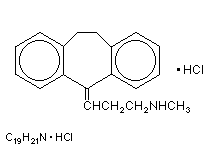
Nortriptyline (HCl) is a tricyclic antidepressant of the dibenzocycloheptene type and is the active metabolite of amitriptyline. Nortriptyline is similar to protriptyline.Nortriptyline (HCl) is used to treat depression and for the management of chronic, severe neurogenic pain. Some efficacy has been reported with nortriptyline in phobic disorder and panic disorder. Nortriptyline was approved as an antidepressant by the FDA in 1964. The concise action of tricyclic antidepressants is not fully understood, but Nortriptyline (HCl) is believed that the most important effect is the enhancement of the actions of norepinephrine and serotonin caused by blocking the reuptake of various neurotransmitters at the neuronal membrane. Nortriptyline is more likely to inhibit the reuptake of serotonin than norepinephrine
Primary Characteristics
It is of Synthetic origin and belongs to Amine.
It belongs to Amine uptake inhibitor pharmacological group on the basis of mechanism of action and also classified in Antidepressant pharmacological group. It is also classified under Psychotherapeutic Drugs .
Molecular Weight: 299.8 · pKa: 9.7 · Solubility in Water: 1 in 50 · Solubility in Alcohol: 1 in 10 · Non-proprietary name: Nortriptyline (HCl).
Pharmacokinetics
Absorption: Nortriptyline (HCl) has an oral bioavailability is 100%, pre-systemic (first-pass) metabolism accounts for 47.5% (±2.5%).
Distribution: Nortriptyline (HCl) has a volume of distribution is 14-401 l/kg. plasma protein binding is 90-95%.
Elimination: it is metabolised via Hepatic, plasma half-life is 36 hr, renal excretion is 62 %.
Advertisement
Indications
Nortriptyline (HCl) is primarily indicated in conditions like Depression, Enuresis, Nausea and vomiting, Pain, Urticaria.
Nortriptyline (HCl) is also indicated for secondary conditions like Cancer.
Contraindications
Nortriptyline (HCl) is contraindicated in conditions like Epilepsy, Mania, Myocardial infarction, Prostatic hypertrophy, Heart block, Close-angle glaucoma.
Dosage
Nortriptyline (HCl)'s dosage details are as follows:
| Dose | Single Dose | Frequency | Route | Instructions |
|---|---|---|---|---|
| Adult Dosage | ||||
| 75 – 100 mg | — | — | PO | upto 150 mg/day . Frequency may be increased upto 4 times/day if needed. |
| Paediatric Dosage (20kg) | ||||
| 10 – 35 mg/kg | — | Every 24h | Ooral | 30 min before bed time .Not recommended under 6 yrs. of children |
| Neonatal Dosage (3kg) | ||||
| 0 – 0 | — | — | Not recommended in this age group | |
Drug Interactions
Always consult your physician for the change of dose regimen or an alternative drug of choice that may strictly be required.
Side Effects
Nortriptyline (HCl) in overdosage may give rise to further complications which include Cholestatic jaundice , Peripheral neuropathy , Postural hypotension .
Nortriptyline (HCl) produces potentially life-threatening effects which include Agranulocytosis. Careful monitoring is needed with proper medical management.
The signs and symptoms that are produced after acute overdosage of Nortriptyline (HCl) are Cardiac arrhythmias, Blurred vision, Constipation, Dry mouth, Urinary retention, Hypoxia, Sinus tachycardia.
Nortriptyline (HCl) is known to cause more or less tolerable side effects which are usually transient. These include Blurred vision, Confusion, Constipation , Dry mouth, Urinary hesitancy.
Warnings / Precautions
Interference in Pathology
Nortriptyline (HCl) may interfere in the diagnosis of Nitrobenzo-oxo-diazole Chloride Test for urinary Amphetamine .
Available Brands
Storage Conditions
Drug Classification
- 1.24.2.1 — Drugs used in depression