
Norfloxacin
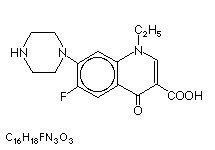
Norfloxacin is a fluoroquinolone antibacterial agent, structurally related to nalidixic acid. Due to it's relatively poor oral bioavailability, its clinical use is limited to the treatment of urinary tract infections and uncomplicated gonorrhea. Norfloxacin is also approved for use as an ophthalmic solution for bacterial conjunctivitis. It has the shortest half-life of all currently available fluoroquinolones. It was initially approved for systemic use by the FDA in October 1986. Norfloxacin is bactericidal via its effects on DNA gyrase, an enzyme responsible for counteracting the excessive supercoiling of DNA during replication or transcription. Although human cells do not contain DNA gyrase, they do contain a topoisomerase enzyme that functions in the same manner. This mammalian enzyme is not affected by bactericidal concentrations of quinolones. Norfloxacin is unclear how inhibition of DNA gyrase leads to bacterial cell death. Both rapid and slow growing organisms are inhibited by fluoroquinolones.
Primary Characteristics
It is of Semi Synthetic origin and belongs to Fluoroquinolone.
It belongs to DNA Gyrase inhibitor pharmacological group on the basis of mechanism of action and also classified in Antibiotic, Quinolone pharmacological group.
Molecular Weight: 319.3 · pKa: 6.2-6.4, 8.7- 8.9 · Solubility in Water: 1 in 100 - 1-1000 · Solubility in Alcohol: 1 in 500 · Non-proprietary name: Norfloxacin · pH: 0.03.
Pharmacokinetics
Absorption: Norfloxacin has an oral bioavailability is 65% (±15%).
Distribution: Norfloxacin has a volume of distribution is 2.5-3.1 l/kg. plasma protein binding is 15%.
Elimination: it is metabolised via Hepatic, plasma half-life is 2.6-4.5 hr, renal excretion is 36%.
Advertisement
Indications
Norfloxacin is primarily indicated in conditions like Bacterial enteric infections, Carvicitis, Cervicitits, Chronic prostatitis, Chronic relapsing UTIS, Gonorrhoea, Urethritis, Urinary tract infection, UTI.
Norfloxacin is also indicated for secondary conditions like Eye infections.
Contraindications
Norfloxacin is contraindicated in conditions like Epilepsy, Hypersensitivity.
Dosage
Norfloxacin's dosage details are as follows:
| Dose | Single Dose | Frequency | Route | Instructions |
|---|---|---|---|---|
| Adult Dosage | ||||
| 0.3 % | 0.3 % | Every 4h | Ophthalmic | |
| 800 mg | 800 mg | — | Oral | For uncomplicated Gonorrhoea |
| 400 mg | 400 mg | Every 12h | PO | For 3 to 10 days |
| Paediatric Dosage (20kg) | ||||
| 0 – 0 | — | — | Not indicated in peads | |
| Neonatal Dosage (3kg) | ||||
| 0 – 0 | — | — | Not used in children | |
Drug Interactions
Always consult your physician for the change of dose regimen or an alternative drug of choice that may strictly be required.
Side Effects
Norfloxacin in overdosage may give rise to further complications which include Hepatitis , Hemolytic anemia , Hemolytic anemia , Seizures , Exfoliative dermatitis , Interstitial nephritis , Hemolytic anemia.
The signs and symptoms that are produced after acute overdosage of Norfloxacin are Crystalluria , Drowsiness, Drowsiness, Acute renal failure, GI disturbances.
Norfloxacin is known to cause more or less tolerable side effects which are usually transient. These include Arthralgia, Constipation , Crystalluria , Depression, Diarrhea, Dry mouth, Fever, GI symptoms, Headache, Heart burn, Insomnia, Nausea, Rashes , Tendinitis, Vomiting .
Warnings / Precautions
Available Brands
Storage Conditions
Drug Classification
- 1.6.2.2.2 — Quinolones
- 2.21.1.1 — Antibacterials
Manufacturers
Manufacturers of Norfloxacin in Pakistan: