
Nicardipine
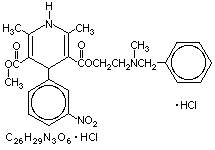
Nicardipine (HCl) is a dihydropyridine calcium-channel blocking agent used for the treatment of vascular disorders such as chronic stable angina, hypertension, and Raynaud's syndrome. its mechanism of action and clinical effects closely resemble those of nifedipine and the other dihydropyridines (amlodipine, felodipine), except that nicardipine is more selective for cerebral and coronary vessels. Furthermore, nicardipine does not intrinsically decrease myocardial contractility and may be useful in the management of congestive heart failure. Nicardipine also has a longer half-life than nifedipine. Nicardipine was approved by the FDA in December 1988. Mechanism of action is similar to nifedipine, nicardipine inhibits the influx of extracellular calcium across the cell membranes of myocardial and vascular smooth muscle without altering serum calcium concentrations and inhibits intracellular phosphodiesterase. The decrease in intracellular calcium inhibits the contractile processes of the myocardial smooth muscle cells, resulting in dilation of the coronary and systemic arteries. These effects elicit an increased oxygen delivery to the myocardial tissue, and a decreased total peripheral resistance, systemic blood pressure, and afterload.
Primary Characteristics
Nicardipine is also known as Nicardipine (HCl).
It is of Synthetic origin and belongs to Dihydropyridine.
It belongs to Calcium L-channel antagonist pharmacological group on the basis of mechanism of action.
Molecular Weight: 515.99 · pKa: 7.2 · Solubility in Water: slightly soluble · Solubility in Alcohol: sparingly soluble · Non-proprietary name: Nicardipine.
Pharmacokinetics
Absorption: Nicardipine has an pre-systemic (first-pass) metabolism accounts for 75% (±20%).
Distribution: Nicardipine has a volume of distribution is 1.7 l/kg. plasma protein binding is > 95 %.
Elimination: it is metabolised via extensive, plasma half-life is 8.6 hr, renal excretion is 59 %.
Advertisement
Indications
Nicardipine is primarily indicated in conditions like Angina, Cerebrovascular disease, Hypertension, Mild to moderate hypertension, Prophylaxis of angina.
Contraindications
Nicardipine is contraindicated in conditions like Aortic stenosis, Hypersensitivity.
Dosage
Nicardipine's dosage details are as follows:
| Dose | Single Dose | Frequency | Route | Instructions |
|---|---|---|---|---|
| Adult Dosage | ||||
| 90 mg | 90 mg | Every 24h | PO | In div.doses. starting dose of 20 mg three times a day is recomended |
| Paediatric Dosage (20kg) | ||||
| 0 – 0 | — | — | Not recommended for this age group | |
| Neonatal Dosage (3kg) | ||||
| 0 – 0 | — | — | Not recommended in this age group | |
Drug Interactions
Always consult your physician for the change of dose regimen or an alternative drug of choice that may strictly be required.
Side Effects
Nicardipine in overdosage may give rise to further complications which include Nausea , Allergic reactions , Orthostatic hypotension , Jaundice , Jaundice , Psychosis , Palpitation , Flushing , Headache , Oedema , Dizziness , Heat sensation .
Nicardipine produces potentially life-threatening effects which include Myocardial infarction, Angina pectoris, Syncope, Hypotension, Pericarditis , Ventricular tachycardia, Atrial fibrillation, syncope. Careful monitoring is needed with proper medical management.
The signs and symptoms that are produced after acute overdosage of Nicardipine are Bradycardia, Hypotension, Flushing, Coma, Drowsiness, Drowsiness, Confusion , Palpitations , Dizziness, AV block, Hepatic necrosis, Weakness , Slurred speech, Chest pain, Hepatic function abnormalities.
Nicardipine is known to cause more or less tolerable side effects which are usually transient. These include Abdominal pain, Asthenia , Cardiac arrhythmias , Dizziness, Dyspnea, Edema, Fatigue, Flushing, Frequent of micturition, Headache, Heart burn, Insomnia, Lassitude , Nausea, Rashes , Tachycardia, Tinnitus, Tremor.
Warnings / Precautions
Available Brands
None recorded.
Storage Conditions
Drug Classification
- 1.12.3.2 — Calcium antagonists