
Amantadine (HCl)
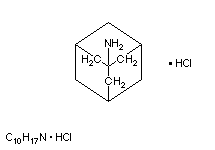
Amantadine is antiviral drug. Amantadine is a synthetic tricyclic amine with a structure unrelated to that of any of the antimicrobial agents. It was accidently discovered that the antiviral drug, it effective in the treatment of influenza also has antiparkinsonism action but Amantadine is less efficacious than Levodopa.
Primary Characteristics
Amantadine (HCl) is also known as Amantadine Sulphate.
It is of Synthetic origin and belongs to Tricyclo amine.
It belongs to Antiviral Agents pharmacological group on the basis of mechanism of action.
Molecular Weight: 187.7 · pKa: 10.4 · Solubility in Water: 1:2.5 · Solubility in Alcohol: 1:5 · Non-proprietary name: Amantadine · pH: 5.7 · Isotonic value: 2.95.
Pharmacokinetics
Absorption: Amantadine (HCl) has an oral bioavailability is 94.5% (±4.5%).
Distribution: Amantadine (HCl) has a volume of distribution is 10.4 l/kg. plasma protein binding is 65%.
Elimination: plasma half-life is 9.7-14.5 hr, renal excretion is 90%.
Advertisement
Indications
Amantadine (HCl) is primarily indicated in conditions like Herpes zoster, Influenza, Influenza A, Influenza type a prophylaxis, Influenza type a treatment, Parkinsonism, Parkinson's disease.
Contraindications
Amantadine (HCl) is contraindicated in conditions like Epilepsy, G6pd deficiency, Renal impairment, Gastric ulceration.
Dosage
Amantadine (HCl)'s dosage details are as follows:
| Dose | Single Dose | Frequency | Route | Instructions |
|---|---|---|---|---|
| Adult Dosage | ||||
| 100 mg | 100 mg | Every 24h | PO | Dose and duration vary according to indication. |
| Paediatric Dosage (20kg) | ||||
| 6.25 mg/kg | 6.25 mg/kg | Every 12h | Oral | |
| Neonatal Dosage (3kg) | ||||
| No data. | ||||
Drug Interactions
Always consult your physician for the change of dose regimen or an alternative drug of choice that may strictly be required.
Side Effects
Amantadine (HCl) produces potentially life-threatening effects which include Coma, Convulsions , CNS dysfunction, Suicidal ideation. Careful monitoring is needed with proper medical management.
The signs and symptoms that are produced after acute overdosage of Amantadine (HCl) are Ventricular arrhythmias, Agressive behavior, Toxic psychosis , Urinary retention, Dilated pupils, Visual hallucination, Convulsions .
Amantadine (HCl) is known to cause more or less tolerable side effects which are usually transient. These include Constipation , Dizziness, Dry mouth, Headache, Insomnia, Light-headedness, Nervousness, Urinary retention, Urinary RetentionX.
Warnings / Precautions
Available Brands
Storage Conditions
Drug Classification
- 1.6.5.3
- 2.6.5.3
- 3.9.1 — Drugs used in parkinsonism
Manufacturers
Manufacturers of Amantadine (HCl) in Pakistan: