
Lithium
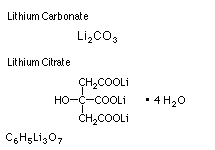
Lithium usually given as carbonate or citrate, provides lithium ions which substitute for sodium in excitable tissues and reduce brain catecholamine levels. Lithium used in the prophylactic treatment of mania and depression it stabilizes the mood and reduces extremes in behavior. Caution in cardiac and renal disease. Needs careful control of plasma levels. <BR>Lithium citrate is a chemical compound of lithium and citrate that is used as a mood stabilizer in psychiatric treatment of manic states and bipolar disorder. The molecular weight of Lithium citrate is 209.92
Primary Characteristics
Lithium is also known as Lithium citrate, Lithium Carbonate.
It is of Natural origin and belongs to Alkaline Metal.
It belongs to Psychotropic Drugs pharmacological group on the basis of mechanism of action.
Molecular Weight: 73.9 · Solubility in Water: Slightly soluble · Solubility in Alcohol: insoluble · Non-proprietary name: Lithium.
Pharmacokinetics
Absorption: Lithium has an oral bioavailability is 97.5% (±2.5%).
Distribution: Lithium has a volume of distribution is 0.81 l/kg. plasma protein binding is < 10%.
Elimination: plasma half-life is 8-45 hr, renal excretion is 90-98%.
Advertisement
Indications
Lithium is primarily indicated in conditions like Bipolar disorders, Depression, Mania, Mood disorder prophylaxis, Psychosis, Schizo-affective psychosis prophylaxis.
Lithium is also indicated for secondary conditions like Aggression, Chemotherapy induced neutropenia.
Contraindications
Lithium is contraindicated in conditions like Heart failure, Psoriasis, Salt depletion, Cardiovascular disease, Heart disease, Kidney infection, Electrolyte disturbance, Acneiform eruption, Breast feeding, Hypothyroidism.
Dosage
Lithium's dosage details are as follows:
| Dose | Single Dose | Frequency | Route | Instructions |
|---|---|---|---|---|
| Adult Dosage | ||||
| 0.8 mg | 0.8 mg | Every 24h | PO | For first 5-7 days. Initial dose then adjusted according to serum lithium estinations. |
| 1.75 g | 1.75 g | Every 24h | PO | For 5-7 days for acute mania. |
| Paediatric Dosage (20kg) | ||||
| 0 – 0 | — | — | Not recommended for this age group | |
| Neonatal Dosage (3kg) | ||||
| No data. | ||||
Drug Interactions
Always consult your physician for the change of dose regimen or an alternative drug of choice that may strictly be required.
Side Effects
Lithium in overdosage may give rise to further complications which include Convulsions , Cardiac arrhythmias, Cardiac arrhythmias , Dehydration , Hypercalcemia , Sinus bradycardia , Hyperthyroidism , Leucocytosis , Dysarthria.
Lithium produces potentially life-threatening effects which include Coma, Acute Renal Failure , Acute renal failure. Careful monitoring is needed with proper medical management.
The signs and symptoms that are produced after acute overdosage of Lithium are Bradycardia, Diarrhea, Cardiac arrhythmias, Convulsions , Coma, Polyuria, Acute renal failure, Ataxia, Nausea & vomiting, Glycosuria , Tinnitus , Tinnitus, Permanent disability, Abdominal discomfort.
Lithium is known to cause more or less tolerable side effects which are usually transient. These include Acneform eruptions, Anorexia , Ataxia, Confusion, Diarrhea, Drowsiness, ECG changes, Goiter, Muscle weakness, Nausea and vomiting, Polydipsia, Polyuria, Psoriasis , Tremor, Vertigo, Vison disturbance, Weight gain, Xerostomia .
Warnings / Precautions
Available Brands
Storage Conditions
Drug Classification
- 1.24.2.2 — Drugs used in bipolar disorders
Manufacturers
Manufacturers of Lithium in Pakistan: