
Isotretinoin
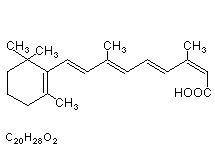
Isotretinoin is the 13-cis-retinoic acid, a vitamin A derivative, used systematically for treatment of severecystic and conglobulate acne acne not responsive to antibiotic therapy. Thought to act directly on sebaceous glands in the skin to reduce sebum production and alters the lipid composition of the skin surface.
Primary Characteristics
It is of Synthetic origin and belongs to Retinoid.
It is classified in Retinoic Acid Derivative pharmacological group. It is also classified under Dermatological Products .
Molecular Weight: 300.4 · Solubility in Water: Insoluble · Solubility in Alcohol: slightly soluble · Non-proprietary name: Isotretinoin.
Pharmacokinetics
Absorption: Isotretinoin has an oral bioavailability is 94% (±4%), pre-systemic (first-pass) metabolism accounts for 2.5% (±2.5%).
Distribution: Isotretinoin has a volume of distribution is 1.5 l/kg. plasma protein binding is 99.9%.
Elimination: it is metabolised via Hepatic, plasma half-life is 10-20 hr.
Advertisement
Indications
Isotretinoin is primarily indicated in conditions like Gram negative folliculitis, Keratiniztion disorders, Mild acne in patients with dysmorphohobia, Rosacea, Severe acne.
Contraindications
Isotretinoin is contraindicated in conditions like Hypersensitivity.
Dosage
Isotretinoin's dosage details are as follows:
| Dose | Single Dose | Frequency | Route | Instructions |
|---|---|---|---|---|
| Adult Dosage | ||||
| 500 ug | 500 ug | Every 24h | PO | Initial oral dose for acne with food amdatjust up to 1 mg/kg according to response. |
| 0.05 % | 0.05 % | Every 12h | Topical,gel | For 8 Weeks |
| Paediatric Dosage (20kg) | ||||
| 0 – 0 | — | — | Doses not established for this age group | |
| Neonatal Dosage (3kg) | ||||
| 0 – 0 | — | — | Not recommended in this age group | |
Drug Interactions
Always consult your physician for the change of dose regimen or an alternative drug of choice that may strictly be required.
Side Effects
Isotretinoin in overdosage may give rise to further complications which include Thrombocytopenia , Hepatitis , Myalgia , Hypercholesterolemia, Hypercholesterolemia.
Isotretinoin produces potentially life-threatening effects which include Depression. Careful monitoring is needed with proper medical management.
Isotretinoin is known to cause more or less tolerable side effects which are usually transient. These include Abdominal pain, Alopecia, Arthralgia, Blepharoconjunctivitis, Blurred vision, Cheilitis, Conjunctivitis, Desquamation , Epistaxis, Erythematous rash, Facial dermatitis, Headache, Hearing impairment, Impaired night vision, Nasal bleeding, Paronychia, Photophobia , Pruritis, Skin fragility, Skin sepsis.
Warnings / Precautions
Interference in Pathology
Isotretinoin may interfere in the diagnosis of Liver Function Test (LFT) , Raised creatine phosphokinase.
Available Brands
Storage Conditions
Drug Classification
- 1.13.5.1 — Antiacne preparations
Manufacturers
Manufacturers of Isotretinoin in Pakistan: