
Iohexol
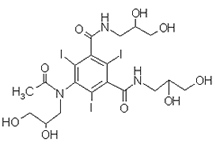
Iohexol is a non-ionic, water soluble, low osmolality, iodinated, organic radiological contrast medium of exceptionally low clinical toxicity. Iohexol is used in cardiac angiography, myelography, urogrphy, arthrography, and ventriculography etc. Iohexol is prepared by chemical synthesis. Iohexol is administered intrathecaly, and intravascularly.
Primary Characteristics
It is of Synthetic origin and belongs to Iodine.
It belongs to Radiopaque Agents pharmacological group on the basis of mechanism of action and also classified in Diagnostic Aids pharmacological group.
Molecular Weight: 821.14 · pKa: >13 · Solubility in Water: high · Solubility in Alcohol: high · Non-proprietary name: Iohexol.
Pharmacokinetics
Absorption: Iohexol has an oral bioavailability is 9.5% (±5.5%).
Distribution: Iohexol has a volume of distribution is 0.27 l/kg. plasma protein binding is <5%.
Elimination: plasma half-life is 121 min, renal excretion is >90%(unchanged).
Advertisement
Indications
Iohexol is primarily indicated in conditions like Angiography, Metastatic lung cancer, Metastatic pancreatic cancer.
Iohexol is also indicated for secondary conditions like Arthrography, Computed tomography scans, Myelography, Urography.
Contraindications
Iohexol is contraindicated in conditions like Cough, Dyspepsia, Fever, Pulmonary disease, fever.
Dosage
Iohexol's dosage details are as follows:
| Dose | Single Dose | Frequency | Route | Instructions |
|---|---|---|---|---|
| Adult Dosage | ||||
| 8 ml | 8 ml | — | IT | Thoracic myelography by lumbar or cervical injection: 6 to 10 mL of a solution containing the equivalent of 300 mg of iodine per mL. {68} |
| 9.25 ml | 9.25 ml | — | IT | Thoracic myelography by lumbar or cervical injection—: 6 to 12.5 mL of a solution containing the equivalent of 240 mg of iodine per mL |
| 12.5 ml | 12.5 ml | — | IT | Lumbar myelography by lumbar injection: 12.5 mL of a solution containing the equivalent of 240 mg of iodine per mL. |
| 13.5 ml | 13.5 ml | — | IT | Lumbar myelography by lumbar injection: 10 to 17 mL of a solution containing the equivalent of 180 mg of iodine per mL |
| 50 ml | 50 ml | — | IV | Urography, excretory: Intravenous, 50 mL of a solution containing the equivalent of 240 mg of iodine per mL. {68} |
| 125 ml | 125 ml | — | IV | CT of the body: Intravenous, by rapid injection or infusion, 50 to 200 mL, of a solution containing the equivalent of 300 mg of iodine per mL; or 60 to 100 mL of a solution containing the equivalent of 350 mg of iodine per mL. |
| Paediatric Dosage (20kg) | ||||
| No data. | ||||
| Neonatal Dosage (3kg) | ||||
| No data. | ||||
Drug Interactions
Always consult your physician for the change of dose regimen or an alternative drug of choice that may strictly be required.
Side Effects
Iohexol in overdosage may give rise to further complications which include Hypotension , Bronchospasm , Hypotension , Bronchospasm , Oedema .
Iohexol produces potentially life-threatening effects which include Anaphylactic shock, Cardiac arrhythmias, Bronchospasm , Bronchospasm, Angioneurotic edema, Cardiovascular collapse, Acute pulmonary edema, Angioneurotic edema. Careful monitoring is needed with proper medical management.
Iohexol is known to cause more or less tolerable side effects which are usually transient. These include Aseptic maningitis, Backache , Confusion, Convulsions , Dizziness, Erythema, Faintness , Flushing, Headache, Maculopapular rash, Metallic taste, Nausea, Neck stiffiness, Perineal sensation, Pruritus , Rhinitis , Salivary gland swelling, Sneezing, Urticaria, Vein irritation at injection site, Visual & sleep disturbances, Vomiting .
Warnings / Precautions
Interference in Pathology
Iohexol may interfere in the diagnosis of Prolongation of Thrombin Time and other measures of coagulation , Sulphosalicylic acid for urinary protein give false positive result , False alkaptouria with cupric sulphate urinary glucose .
Available Brands
Storage Conditions
Drug Classification
- 1.14.2 — Radiocontrast media