
Hydralazine (HCl)
Also known as: Apressinum, Apresoline
Hydralazine is antihypertensive agent. It acts as a vasodilator. It relaxes and expands blood vessels and lowers the blood pressure. It also function as antioxidant. It has been available for many years, though it was initially thought not to be particularly effective because tachyphylaxis to hypertensive effects developed rapidly. Now the benefits of combination therapy are recognized, and may be used more effectively particularly in severe hypertension.
Primary Characteristics
Hydralazine (HCl) is also known as Apressinum, Apresoline.
It is of Synthetic origin and belongs to Phthalazine.
It belongs to Vasodilators pharmacological group on the basis of mechanism of action and also classified in Antihypertensive Agents pharmacological group.
Molecular Weight: 196.6 · pKa: 0.5, 7.3 · Solubility in Water: 1 in 25 · Solubility in Alcohol: 1 in 500.
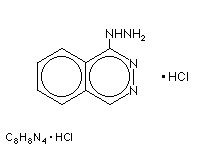
Pharmacokinetics
Absorption: Hydralazine (HCl) has an oral bioavailability is 100%, pre-systemic (first-pass) metabolism accounts for 77.5% (±12.5%).
Distribution: Hydralazine (HCl) has a volume of distribution is 3.56 l/kg. plasma protein binding is 87%.
Elimination: it is metabolised via extensive by liver, plasma half-life is 3.7 hr, renal excretion is 80%,14%unchanged.
Advertisement
Indications
Hydralazine (HCl) is primarily indicated in conditions like Benign gastric and duodenal ulcers, Heart failure, Hypertension, Hypertension with renal complications and hypertensive crisis (including during pregnancy), Hypertensive emergencies, Moderate to severe hypertension, Moderate to severe hypertension (adjunct), Primary pulmonary hypertension, Severe or recurrent duodenal and gastric ulcertion.
Hydralazine (HCl) is also indicated for secondary conditions like Heart failure (with long acting nitrate).
Contraindications
Hydralazine (HCl) is contraindicated in conditions like Angina, Rheumatic mitral valvular heart disease, Hypersensitivity.
Dosage
Hydralazine (HCl)'s dosage details are as follows:
| Dose | Single Dose | Frequency | Route | Instructions |
|---|---|---|---|---|
| Adult Dosage | ||||
| 100 – 300 mg | — | — | PO | Maintanace, as required. |
| 25 mg | 25 mg | Every 6h | PO | Initially for Several Weeks |
| Paediatric Dosage (20kg) | ||||
| 0.2 mg/kg | 0.2 mg/kg | — | Intra Muscular | Initially for Once or repeated after 30 Minutes |
| 0.357 mg/kg | 0.357 mg/kg | Every 6h | Oral | Maintenance, As Required |
| 0.2 mg/kg | 0.2 mg/kg | — | Slow IV | Initially for Once or repeated after 30 Minutes |
| Neonatal Dosage (3kg) | ||||
| 0.2 mg/kg | 0.2 mg/kg | — | Intra Muscular | Initially for Once or repeated after 30 Minutes |
| 0.357 mg/kg | 0.357 mg/kg | Every 6h | Oral | Maintenance, As Required |
| 0.2 mg/kg | 0.2 mg/kg | — | Slow IV | Initially for Once or repeated after 30 Minutes |
Drug Interactions
Always consult your physician for the change of dose regimen or an alternative drug of choice that may strictly be required.
Side Effects
Hydralazine (HCl) in overdosage may give rise to further complications which include Tachycardia , Lupus erythematosus , Hydralazine lupus, Peripheral neuritis , Tachycardia.
The signs and symptoms that are produced after acute overdosage of Hydralazine (HCl) are Coma, Tachycardia, Dysarthria .
Hydralazine (HCl) is known to cause more or less tolerable side effects which are usually transient. These include angina pectoris, Chest pain, Diarrhea, Edema, Flushing, Headache, Impotence, Lacrimation, Loss of appetite, Micturition, Muscle cramps, Nausea and vomiting, Palpitation, Tremor, Weakness.
Warnings / Precautions
Interference in Pathology
Hydralazine (HCl) may interfere in the diagnosis of Serum test for SGOT, Glucose and Uric Acid , Urine tests for Catecholamines .
Available Brands
Storage Conditions
Drug Classification
- 1.12.3.7 — Direct vasodilators
Manufacturers
Manufacturers of Hydralazine (HCl) in Pakistan: