
Hydrochlorothiazide
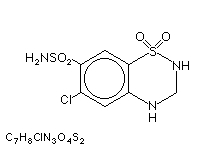
Hydrochlorothiazide is a prototype drug of thiazide diuretics. Hydrochlorothiazide is antihypertensive agent. It increases the urination and reduces the amount of water and sodium retained by the body. The drugs in this class are formally called benzothiadiazide, usually shortened to thiazides. The nature of the hetrocyclic rings and the substitution on these ring may vary among the congeners but all of them retain a unsubstituted sulfonamide group. Development of thiazides and other modern diuretics began when a perceptive physician noticed that patients receiving sulfanilamide, an early antimicrobial agent, developed metabolic acidosis and a very alkaline urine. Careful study revealed that the drug was causing sodium bicarbonate diuresis. The realization that it could be useful diuretic led first to the development of acetazolamide and then to the thiazides.
Primary Characteristics
It is of Synthetic origin and belongs to Thiazide.
It belongs to NaCl cotransport inhibitor pharmacological group on the basis of mechanism of action and also classified in Antihypertensive Agent, Combination pharmacological group.
Molecular Weight: 297.7 · pKa: 7.9, 9.2 · Solubility in Water: Insoluble · Solubility in Alcohol: soluble · Non-proprietary name: Hydrochlorothiazide.
Pharmacokinetics
Distribution: Hydrochlorothiazide has a volume of distribution is 3.6-7.8 l/kg. plasma protein binding is 68%.
Elimination: it is metabolised via Not metabolized, plasma half-life is 5.6-14.8hrs, renal excretion is major,Urine(as unchanged drug).
Advertisement
Indications
Hydrochlorothiazide is primarily indicated in conditions like Diabetes insipidus, Edema, Hypercalciuria, Hypertension, Nephrolithiasis, Nephrotic syndrome, Oedema, Proximal renal tubular acidosis.
Hydrochlorothiazide is also indicated for secondary conditions like Exercise induced hyperkalemia, Osteoporosis, Renal hypophosphatemic rickets.
Contraindications
Hydrochlorothiazide is contraindicated in conditions like Diabetes mellitus, Gout, Renal diseases, Anuria, Hyperlipidemia, Liver diseases, Ecg abnormalities.
Dosage
Hydrochlorothiazide's dosage details are as follows:
| Dose | Single Dose | Frequency | Route | Instructions |
|---|---|---|---|---|
| Adult Dosage | ||||
| 31.25 mg/day | 31.25 mg/day | Every 24h | PO | Hypertension (upto 100mg/day) |
| 62.5 mg | 62.5 mg | Every 24h | PO | As Required For oedema (upto 200mg/day) |
| Paediatric Dosage (20kg) | ||||
| 2.5 mg/kg | 2.5 mg/kg | Every 12h | Oral | |
| Neonatal Dosage (3kg) | ||||
| 1 mg/kg | 1 mg/kg | Every 12h | Oral | |
Drug Interactions
Always consult your physician for the change of dose regimen or an alternative drug of choice that may strictly be required.
Side Effects
Hydrochlorothiazide in overdosage may give rise to further complications which include Pancreatitis , Stevens johnson syndrome , Stevens johnson syndrome , Systemic lupus erythematosus , Pneumonitis , Idiosyncratic hypersensitiviy reactions .
Hydrochlorothiazide produces potentially life-threatening effects which include Hyponatremia, Metabolic disturbances, Idiosyncratic hypersensitivity reactions, Hyponatremia. Careful monitoring is needed with proper medical management.
The signs and symptoms that are produced after acute overdosage of Hydrochlorothiazide are Coma, Volume depletion, Hypokalemia , Hypochloremic alkalosis, Hypersensitivity reactions, Electrolyte disturbances, Lethargy, Hemolytic anemia, Hyponatremia.
Hydrochlorothiazide is known to cause more or less tolerable side effects which are usually transient. These include Allergic reactions, Cardiac arrhythmias , Dry mouth, Ectopic beats, Fatigue, Hyperglycemia, Hyperlipidemia, Hyperuricemia , Hypokalemia , Hypomagnesemia, Lethargy, Paralysis , parasthesia, Restlessness, Thirst, UTI , Weakness.
Warnings / Precautions
Interference in Pathology
Hydrochlorothiazide may interfere in the diagnosis of Periodic determination of serum electrolytes.
Available Brands
Storage Conditions
Drug Classification
- 1.12.4 — Drugs used in heart failure
- 2.16.1 — Thiazide and related diuretics
Manufacturers
Manufacturers of Hydrochlorothiazide in Pakistan: