
Haloperidol
Also known as: Aloperidolo
Haloperidol is a tranquilizer which also has antiemetic, hypotensive and hypothermic actions. Administered orally or intramuscularly. Haloperidol is a neuroleptic/antipsychotic agent. Haloperidol is used to treat schizophrenia (mental disorder), to control of the vocal utterances and tics (an involutary, compulsive, repetative, and stereotype movement of face and shoulders) of tourette's syndrome and to control agitated and disrupted behavior.
Primary Characteristics
Haloperidol is also known as Aloperidolo.
It is of Synthetic origin and belongs to Butyrophenone.
It belongs to D2 antagonist pharmacological group on the basis of mechanism of action. It is also classified under Psychotherapeutic Drugs .
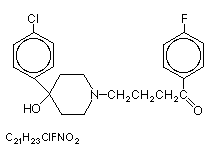
Molecular Weight: 375.9 · pKa: 8.3 · Solubility in Water: 1 in 100 000 · Solubility in Alcohol: 1 in 50 · Non-proprietary name: Haloperidol.
Pharmacokinetics
Absorption: Haloperidol has an oral bioavailability is 62.5% (±2.5%), pre-systemic (first-pass) metabolism accounts for 37.5% (±2.5%).
Distribution: Haloperidol has a volume of distribution is 17-29 l/kg. plasma protein binding is 92%.
Elimination: it is metabolised via 40% Hepatic, plasma half-life is ~20 hr, renal excretion is 45%.
Advertisement
Indications
Haloperidol is primarily indicated in conditions like Adjunctive therapy, Agitation and restlessness, Anxiety, Childhood-onset pervasive dev. Disorder, Emesis, Gille de la tourette syndrome, Hypercalcaemia of malignancy, Hypomania, Intractable hiccup, Maintenance in schizophrenia and other psychoses, Mania, Motor TICS, Nausea and vomiting, Nausea and vomiting (palliative care), Neuroleptanalgesia, Osteolytic lesions and bone pain, Post-operative nausea and vomiting, Prophylaxis of macrocytic anaemias, Prostate cancer, flare with initial gonadorelin therapy, Psychosis, Refractory agitation, Relief of discomfort in mild UTIs, Resistant schizophrenia, Retlessness and confusion in palliative care, Schizophrenia.
Haloperidol is also indicated for secondary conditions like Huntington's disease.
Contraindications
Haloperidol is contraindicated in conditions like Cardiac arrhythmia, Depression, Parkinsonism, Thyrotoxicosis, Prostatic hypertrophy, Coma, Close-angle glaucoma.
Dosage
Haloperidol's dosage details are as follows:
| Dose | Single Dose | Frequency | Route | Instructions |
|---|---|---|---|---|
| Adult Dosage | ||||
| 6.5 mg | 6.5 mg | Every 24h | PO | Maintenance |
| 12.5 mg | 12.5 mg | Every 24h | PO | Initially |
| Paediatric Dosage (20kg) | ||||
| 2.512 mg/kg | 2.512 mg/kg | Every 12h | Intra Muscular | Not recommended under 3 yrs.children |
| 2.512 mg/kg | 2.512 mg/kg | Every 12h | Intra Venous | Not recommended under 3yrs children |
| 50 mg/kg | 50 mg/kg | Every 12h | Oral | Maximum of 150 ug/kg |
| Neonatal Dosage (3kg) | ||||
| 0 – 0 | — | — | Not recommended in this age group | |
Drug Interactions
Always consult your physician for the change of dose regimen or an alternative drug of choice that may strictly be required.
Side Effects
Haloperidol in overdosage may give rise to further complications which include Akathisia , Grimacing , Neurological complications , Parkinsonism , Torticollis , Oculogyric dystonia , Tardive dyskinesia .
Haloperidol produces potentially life-threatening effects which include Neuroleptic Malignant Syndrome , Neuroleptic sudden death syndrome. Careful monitoring is needed with proper medical management.
The signs and symptoms that are produced after acute overdosage of Haloperidol are Hypotension, Unconsciousness, Respiratory depression, Extrapyramidal effects .
Haloperidol is known to cause more or less tolerable side effects which are usually transient. These include Blurred vision, Cardiovascular effects, Constipation , Dry mouth, Nasal stiffiness, Orthostatic hypotension, Urinary frequency, Urinary retensionX.
Warnings / Precautions
Interference in Pathology
Haloperidol may interfere in the diagnosis of TLC Methods of Measuring Urinary Alkaloids .
Available Brands
Storage Conditions
Drug Classification
- 1.24.1 — Drugs used in psychotic disorders