
Guanethidine
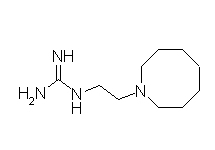
Guanethidine (Monosulphate) is adrenergic neuron blocking agent that reduces release of catecholamines. It reduces the blood pressure and decreases heart rate. The structure of guanethidine contains a highly basic nitrogen that makes the drug too polar to enter the central nervous system. So, the drug has no central nervous ystem effects seen with many of other antihypertensive agents.
Primary Characteristics
Guanethidine is also known as Guanethidine (Monosulphate).
It is of Synthetic origin and belongs to Guanidine.
It belongs to Adrenergic Neurone Blockade pharmacological group on the basis of mechanism of action and also classified in Antihypertensive Agents pharmacological group.
Molecular Weight: 296.4 · pKa: 8.7 · Solubility in Water: Freely soluble · Solubility in Alcohol: almost insoluble · Non-proprietary name: Guanethidine.
Pharmacokinetics
Absorption: Guanethidine has an oral bioavailability is 55% (±5%), pre-systemic (first-pass) metabolism accounts for 35% (±5%).
Distribution: Guanethidine has a plasma protein binding is <10%.
Elimination: it is metabolised via Hepatic, plasma half-life is 120 hr, renal excretion is major.
Advertisement
Indications
Guanethidine is primarily indicated in conditions like Dysthyroid lid retraction, Hypertension, Open-angle glaucoma.
Guanethidine is also indicated for secondary conditions like Causalgia, Hypertensive crisis, Renal hypertension.
Contraindications
Guanethidine is contraindicated in conditions like Phaeochromocytoma, Congestive heart failure, Narrow-angle glaucoma, Hypersensitivity.
Dosage
Guanethidine's dosage details are as follows:
| Dose | Single Dose | Frequency | Route | Instructions |
|---|---|---|---|---|
| Adult Dosage | ||||
| 37.5 mg | 37.5 mg | Every 24h | Maintainance dose hypertensive crises severe pre-eclanpsia. | |
| 15 mg | 15 mg | — | IM | |
| 10 mg | 10 mg | Every 24h | PO | Fnitial. |
| Paediatric Dosage (20kg) | ||||
| 200 ug/kg | 200 ug/kg | Every 24h | Oral | Gradually Titer the dose |
| Neonatal Dosage (3kg) | ||||
| 0 – 0 | — | — | Not recommended in this age group | |
Drug Interactions
Always consult your physician for the change of dose regimen or an alternative drug of choice that may strictly be required.
Side Effects
Guanethidine in overdosage may give rise to further complications which include Fever , Hypotension , Hypotension , Bradycardia , Diarrhea, Anaemia .
Guanethidine produces potentially life-threatening effects which include Cerebral infarction, Renal failure, Fluid retention. Careful monitoring is needed with proper medical management.
The signs and symptoms that are produced after acute overdosage of Guanethidine are Drowsiness, Drowsiness, Confusion , Dizziness, Depression , Persistant hypotension.
Guanethidine is known to cause more or less tolerable side effects which are usually transient. These include Constipation , Depression, Dermatitis, Diarrhea, Dizziness, Failure of ejaculation, Headache, Loss of appetite, Muscle aching, Muscle pain, Nasal congestion , Postural hypotension, Syncope , Vomiting , Worsening of claudication.
Warnings / Precautions
Interference in Pathology
Guanethidine may interfere in the diagnosis of Monitoring of renal function.
Available Brands
None recorded.
Storage Conditions
Drug Classification
- 1.12.3.8 — Ganglion blocking drugs