
Glyceryl Trinitrate
Also known as: Trinitrin, Nitroglycerin, Nitro glycerol, Trinitroglycerine +1 more
Glyceryl Trinitrate is a vasodialator (expands the blood vessels) Glyceryl Trinitrate is used for syptomatic treatment of angina to treat cardiac failure and during hypotensive or cardiac surgery to prevent myocardial infarction.
Primary Characteristics
Glyceryl Trinitrate is also known as Trinitrin, Nitroglycerin, Nitro glycerol, Trinitroglycerine , TNG.
It is of Synthetic origin and belongs to Nitropropane.
It belongs to EDRF (NO) agonist pharmacological group on the basis of mechanism of action and also classified in Vasodilators pharmacological group. It is also classified under Antianginal Agents .
Molecular Weight: 227.1 · Solubility in Water: 1 in 800 · Solubility in Alcohol: 1 in 4 · Non-proprietary name: Glyceryl Trinitrate.
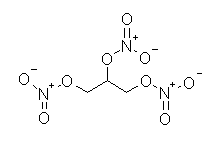
Pharmacokinetics
Absorption: Glyceryl Trinitrate has an pre-systemic (first-pass) metabolism accounts for 75% (±5%).
Distribution: Glyceryl Trinitrate has a volume of distribution is 3.3 l/kg. plasma protein binding is 60%.
Elimination: it is metabolised via primarily in Liver, plasma half-life is 1-3 min, renal excretion is partial.
Advertisement
Indications
Glyceryl Trinitrate is primarily indicated in conditions like Anal fissure, Angina pectoris, Cardiac failure, Cardiopulmonary oedema, Long-term treatment of healed reflux oesophagitis, Moderate to severe reflux oesophagitis, Myocardial infarction, Oesophageal spasm, Oesophageal spasm, Postoperative hypertension, Prinzmetal's angina, Prophylaxis of angina, Unstable angina.
Contraindications
Glyceryl Trinitrate is contraindicated in conditions like Glucoma, Hypovolaemia, Cardiac temponade, Cardiomyopathy, Cor pulmonale, Mitral valve prolapse, Raised intracranial pressure.
Dosage
Glyceryl Trinitrate's dosage details are as follows:
| Dose | Single Dose | Frequency | Route | Instructions |
|---|---|---|---|---|
| Adult Dosage | ||||
| 105 mcg | 105 mcg | — | IV | |
| 300 – 600 ug | — | — | Sublingual | placed under the tongue 3 doses of glyceryl trinitrate can be repeated every with in 15 minutes untill pain relieves. |
| 400 ug | 400 ug | — | Topical | (Aerosol spray)Each are directed on to or under the tongue. |
| Paediatric Dosage (20kg) | ||||
| 0 – 0 | — | — | — | Not Recommended in this Age Group |
| Neonatal Dosage (3kg) | ||||
| 0 – 0 | — | — | Not recommended in this age group | |
Drug Interactions
Always consult your physician for the change of dose regimen or an alternative drug of choice that may strictly be required.
Side Effects
Glyceryl Trinitrate in overdosage may give rise to further complications which include Tachycardia , Bradycardia , Collapse .
The signs and symptoms that are produced after acute overdosage of Glyceryl Trinitrate are Hypotension, Flushing, Tachycardia , Coma, Palpitations , Metabolic acidosis, Headache, Cardiovascular collapse, Syncope , Neurologic deficit, Methemoglobinemia, Increased intracranial pressure, Hypoxia, Cyanosis.
Glyceryl Trinitrate is known to cause more or less tolerable side effects which are usually transient. These include Abdominal pain, Contact dermatitis, dizziness, Fecal incontinence, Headache, Nausea, Orthostatic hypotension, Palpitation, Restlessness, Syncope , Urinary incontinence, VertigoX, Vomiting , Weakness.
Warnings / Precautions
Interference in Pathology
Glyceryl Trinitrate may interfere in the diagnosis of False decrease in serum cholestrol by Zlotkis-Zak color reaction technique. , Increased urinary conc. of catecholamines and their metabolites. .
Available Brands
Click on a strength to view available brands.
Single Ingredient
Multi-Ingredient Combinations
Storage Conditions
Drug Classification
- 1.12.1 — Antianginal drugs