
Alcohol
Alcohol is a CNS depressant. Alcohol is the most commonly abused drug in the world. Ethyl it has occuppied an important place in the history of humankind for at least 8000 years. In western society beer and wine were a main staple of daily life until the 19th century. Today Alcohol is widely consumed. Alcohol is one of the least potent drugs consumed by the human, yet Alcohol is the cause of more preventable morbidity and mortality than all other drugs combined with the exception of tobacco. Like other sedative hyponotic drugs, it in low to moderate amounts relieves the anxiety and fosters a feeling of well being and causes a reduction of the symptoms and hormonal changes associated with stress.
Primary Characteristics
It is of Semi Synthetic origin and belongs to Ethanol.
It belongs to Alcohol dehydrogenase inhibitor pharmacological group on the basis of mechanism of action.
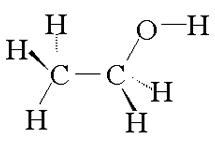
Molecular Weight: 46.1 · pKa: not ionizable · Solubility in Water: completely miscible · Non-proprietary name: Ethyl alcohol · pH: 6 · Isotonic value: 1.39.
Pharmacokinetics
Absorption: Alcohol has an oral bioavailability is 100%, pre-systemic (first-pass) metabolism accounts for 5% (±5%).
Distribution: Alcohol has a volume of distribution is 0.6 l/kg. plasma protein binding is negligible.
Elimination: it is metabolised via 90-98% via liver, plasma half-life is dose-dependent.
Advertisement
Indications
Alcohol is primarily indicated in conditions like Kidney ablation, Nerve block, Poisoning of ethylene glycol and methanol, Premature labour.
Contraindications
Alcohol is contraindicated in conditions like Hepatic disease, Seizures, Renal impairment, Postpartum haemorrhage.
Dosage
Alcohol's dosage details are as follows:
| Dose | Single Dose | Frequency | Route | Instructions |
|---|---|---|---|---|
| Adult Dosage | ||||
| 1000 mg/kg | 1000 mg/kg | — | IV | Load for Once |
| 121.41 mg/kg.hr | 121.41 mg/kg.hr | — | IV Inf | Maintenance, As Required |
| Paediatric Dosage (20kg) | ||||
| 0 – 0 | — | — | — | Not Indicated in this Age Group |
| Neonatal Dosage (3kg) | ||||
| 0 – 0 | — | — | Not indicated in this age group | |
Drug Interactions
Always consult your physician for the change of dose regimen or an alternative drug of choice that may strictly be required.
Side Effects
Alcohol in overdosage may give rise to further complications which include Coma , Cardiomyopathy .
The signs and symptoms that are produced after acute overdosage of Alcohol are Metabolic acidosis, Hypoglycemia, Hypothermia, CNS depression, Acute gastritis.
Alcohol is known to cause more or less tolerable side effects which are usually transient. These include Amnesia , Ataxia, Disinhibtion, Drowsiness, Dysarthria , Hypothermia , Lethargy, Slurred speech.
Warnings / Precautions
Interference in Pathology
Alcohol may interfere in the diagnosis of Test for Serum Acid Phosphatase and Ionized Calcium .
Available Brands
Storage Conditions
Drug Classification
- 1.24.3 — Drugs used in anxiety and sleep disorders