
Ethosuximide
Also known as: Emeside, Zarontin
Ethosuximide is antiepileptic agent. It was introduced in 1960 as the third of three marketed succinimides. its origin is in the cyclic ureide structure. It has a considerable efficasy against pentylenetetrazol seizures and was introduced as a 'pure petit mal' drug. its popularity continues, based on its safety and efficasy. its role as the first choice anti-absence drug remains undiminished, in part because of the idiosyncratic hepatotoxicity of the alternative drug, valproic acid. Ethosuximide is administered orally.
Primary Characteristics
Ethosuximide is also known as Emeside, Zarontin.
It is of Synthetic origin and belongs to Pyrrolidinedione.
Molecular Weight: 141.2 · pKa: 9.3 · Solubility in Water: 1 in 4.5 · Solubility in Alcohol: 1 in < 1 · Non-proprietary name: Ethosuximide.
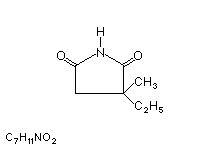
Pharmacokinetics
Absorption: Ethosuximide has an oral bioavailability is 97% (±2%), pre-systemic (first-pass) metabolism accounts for 0.00255% (±0.00155%).
Distribution: Ethosuximide has a volume of distribution is 0.7 l/kg. plasma protein binding is negligible.
Elimination: it is metabolised via hepatic, plasma half-life is 53-56 hr, renal excretion is 17-38%.
Advertisement
Indications
Ethosuximide is primarily indicated in conditions like Generalised epilepsy with absence seizures.
Ethosuximide is also indicated for secondary conditions like Myoclonic seizures.
Contraindications
Ethosuximide is contraindicated in conditions like Hypersensitivity to any component of product.
Dosage
Ethosuximide's dosage details are as follows:
| Dose | Single Dose | Frequency | Route | Instructions |
|---|---|---|---|---|
| Adult Dosage | ||||
| 17.856 mg/kg | 17.856 mg/kg | Every 24h | PO | Maintenance, As Required |
| 1125 mg/d | 1125 mg/d | Every 24h | PO | Initially for a week |
| Paediatric Dosage (20kg) | ||||
| 18.75 mg/kg | 18.75 mg/kg | Every 12h | Oral | Start with low doses, and then Gradually Increase |
| Neonatal Dosage (3kg) | ||||
| 0 – 0 | — | — | Not indicated in this age group | |
Drug Interactions
Always consult your physician for the change of dose regimen or an alternative drug of choice that may strictly be required.
Side Effects
Ethosuximide in overdosage may give rise to further complications which include Erythema multiforme, Systemic lupus erythematosus , Tonic-clonic seizures .
Ethosuximide produces potentially life-threatening effects which include Bone marrow suppression. Careful monitoring is needed with proper medical management.
The signs and symptoms that are produced after acute overdosage of Ethosuximide are Drowsiness, Headache, Dysequilibrium, Unsteadiness , Lethargy.
Ethosuximide is known to cause more or less tolerable side effects which are usually transient. These include Abdominal discomfort, Anorexia , GI symptoms, Hiccups, Nausea, Vomiting .
Warnings / Precautions
Interference in Pathology
Ethosuximide may interfere in the diagnosis of Urinanalysis , Liver Function Test (LFT) .
Available Brands
None recorded.
Storage Conditions
Drug Classification
- 1.5 — Anticonvulsants and Antiepileptics