
Enalapril (Maleate)
Enalapril (Maleate) is ACE inhibitor. It prevents the conversion of certain enzymes in the body and prevents contraction of blood vessels. It decreases the blood pressure and makes the heart beat stronger. Enalapril (Maleate) is used to treat hypertension (high blood pressure), heart failure or in diabetic patients to prevent kidney problems.
Primary Characteristics
It is of Synthetic origin and belongs to Phenylpropyl Amino acid.
It belongs to Angiotensin converting enzyme inhibitor-ACEI pharmacological group on the basis of mechanism of action and also classified in Antihypertensive Agents pharmacological group.
Molecular Weight: 492.5 · pKa: 3.0, 5.4 · Solubility in Water: high · Solubility in Alcohol: freely soluble · Non-proprietary name: Enalapril (Maleate).
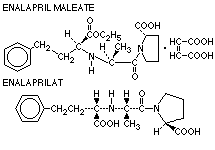
Pharmacokinetics
Absorption: Enalapril (Maleate) has an oral bioavailability is 67.5% (±7.5%), pre-systemic (first-pass) metabolism accounts for 20%.
Distribution: Enalapril (Maleate) has a volume of distribution is 1.7l/kg. plasma protein binding is 60%.
Elimination: it is metabolised via rapid & extensively via liver, plasma half-life is 35 hr, renal excretion is 61%.
Advertisement
Indications
Enalapril (Maleate) is primarily indicated in conditions like Congestive heart failure, Diabetic retinopathy, Essential hypertension, Heart failure (adjunct), Hypertension, Left ventricular dysfunction, NSAID-associated gastric and duodenal ulcers, Renal hypertension, Severe or recurrent duodenal and gastric ulcertion.
Enalapril (Maleate) is also indicated for secondary conditions like Essential and renovascular hypertension.
Contraindications
Enalapril (Maleate) is contraindicated in conditions like Angioneurotic edema, Aortic stenosis, Bilateral renal artey stenosis.
Dosage
Enalapril (Maleate)'s dosage details are as follows:
| Dose | Single Dose | Frequency | Route | Instructions |
|---|---|---|---|---|
| Adult Dosage | ||||
| 2.5 mg | 2.5 mg | Every 24h | PO | Initial |
| 15 mg | 15 mg | Every 24h | PO | Maintenance |
| Paediatric Dosage (20kg) | ||||
| 80 – 50 mcg/kg | — | Every 24h | ||
| Neonatal Dosage (3kg) | ||||
| No data. | ||||
Drug Interactions
Always consult your physician for the change of dose regimen or an alternative drug of choice that may strictly be required.
Side Effects
Enalapril (Maleate) in overdosage may give rise to further complications which include Hepatotoxicity , Anaphylactoid reactions , Vasculitis , Angioedema , Neutropenia , Acute renal failure , Hepatotoxicity , Angioedema .
The signs and symptoms that are produced after acute overdosage of Enalapril (Maleate) are Hypotension.
Enalapril (Maleate) is known to cause more or less tolerable side effects which are usually transient. These include Azotemia, Dizziness, Dry cough, Fatigue, Rashes , Taste disturbances.
Warnings / Precautions
Interference in Pathology
Enalapril (Maleate) may interfere in the diagnosis of Increased Serum Potassium Level.
Available Brands
Storage Conditions
Drug Classification
- 1.12.3.3 — ACE inhibitors
- 2.12.4 — Drugs used in heart failure