
Dopamine (HCl)
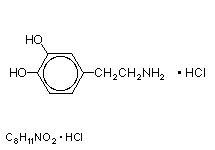
Dopamine occurs in the CNS naturally in the basal ganglia where it functions as a neurotransmitter as well as in the adrenal medulla. Chemically Dopamine (HCl) is 3, 4-dihydroxyphenethyamine. Dopamine (HCl) is the immediate metabolic precursor to norepinephrine. It can activate a and ß adrenergic receptors. It raises the blood pressure and effective in treating acute heart attack. It provides additional pumping strength by stimulating the heart muscle. In some patients, Dopamine (HCl) is used for improving kidney blood supply.
Primary Characteristics
It is of Natural origin and belongs to Catecholamin.
It belongs to Dopamine agonist pharmacological group on the basis of mechanism of action and also classified in Adrenergic Agonist Agent pharmacological group. It is also classified under Drugs used in Shock .
Molecular Weight: 189.6 · pKa: 8.8 · Solubility in Water: > 1 in 10 · Solubility in Alcohol: > 1 in 100 · Non-proprietary name: Dopamine (HCl).
Pharmacokinetics
Absorption: Dopamine (HCl) has an pre-systemic (first-pass) metabolism accounts for 100%.
Distribution: Dopamine (HCl) has a volume of distribution is 0.89 l/kg.
Elimination: it is metabolised via extensive by hepatic, renal & blood, plasma half-life is 6.7-12 hr, renal excretion is major.
Advertisement
Indications
Dopamine (HCl) is primarily indicated in conditions like Acid-related dyspepsia, Cardiogenic shock, Cardiopulmonary resuscitation, Heart failure, Metastatic colorectal cancer, Oliguria, Septic shock.
Dopamine (HCl) is also indicated for secondary conditions like Parkinson's disease, Prolactinoma.
Contraindications
Dopamine (HCl) is contraindicated in conditions like Phaeochromocytoma, Thyrotoxicosis, Tachyarrythmia, Ventricular fibrillation.
Dosage
Dopamine (HCl)'s dosage details are as follows:
| Dose | Single Dose | Frequency | Route | Instructions |
|---|---|---|---|---|
| Adult Dosage | ||||
| 3.5 ug/ kg.min | 3.5 ug/ kg.min | — | IV-Inf | Initial, increase gradually. |
| 35 ug/ kg.min | 35 ug/ kg.min | — | IV-Inf | Maintenance, As Required. |
| Paediatric Dosage (20kg) | ||||
| 8.5 ug/kg.min | 8.5 ug/kg.min | — | IV Infusion | As Required |
| Neonatal Dosage (3kg) | ||||
| 8.5 ug/kg.min | 8.5 ug/kg.min | — | IV Infusion | As Required |
Drug Interactions
Always consult your physician for the change of dose regimen or an alternative drug of choice that may strictly be required.
Side Effects
Dopamine (HCl) in overdosage may give rise to further complications which include Hypertension , Tissue necrosis , Tissue sloughing , Peripheral ischemia.
Dopamine (HCl) produces potentially life-threatening effects which include Arrhythmias, Anginal pain, Ventricular arrhythmias. Careful monitoring is needed with proper medical management.
The signs and symptoms that are produced after acute overdosage of Dopamine (HCl) are Elevation of BP .
Dopamine (HCl) is known to cause more or less tolerable side effects which are usually transient. These include Azotemia, Bradycardia , Dyspnea, Elevated blood pressure, Glucose intolerance, Headache, Mydriasis, Nausea, Palpitation, Piloerection , Tachycardia, Vomiting .
Warnings / Precautions
Interference in Pathology
Dopamine (HCl) may interfere in the diagnosis of Urinary Tests for Amino Acids or Catecholamines , Tests for detecting uric acid or urobilinogen .
Available Brands
Storage Conditions
Drug Classification
- 1.12.4 — Drugs used in heart failure