
Disulfiram
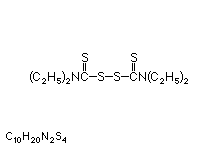
Disulfiram is a widely used antioxidant in rubber industry, causes extreme discomfort to patients who drink alcoholic beverages.Disulfiram is useful as a pharmacologic adjunct in the treatment of alcoholism. Disulfiram is given to persons who are seriously desiring to stop alcohol intake. It causes an intolerance to alcohol. It produces unpleasant reactions of flushing, headache, nausea, vomiting, dizziness, sweating, pounding heart, blurred vision when person ingested even small amounts of alcohol.
Primary Characteristics
It is of Synthetic origin and belongs to Alkyl Thiuram.
It belongs to Alcohol dehydrogenase inhibitor pharmacological group on the basis of mechanism of action and also classified in Antidotes pharmacological group.
Molecular Weight: 296.5 · pKa: not relevant · Solubility in Water: insoluble · Solubility in Alcohol: 1 in 65 · Non-proprietary name: Disulfiram.
Pharmacokinetics
Absorption: Disulfiram has an oral bioavailability is 40% (±40%).
Distribution: Disulfiram has a plasma protein binding is 50%.
Elimination: it is metabolised via extensive, plasma half-life is 7.3 ± 1.5 hr, renal excretion is partial.
Advertisement
Indications
Disulfiram is primarily indicated in conditions like Alcohol abuse, Nickel dermatitis.
Contraindications
Disulfiram is contraindicated in conditions like Psychosis, Peripheral neuropathy, Cardiovascular disease.
Dosage
Disulfiram's dosage details are as follows:
| Dose | Single Dose | Frequency | Route | Instructions |
|---|---|---|---|---|
| Adult Dosage | ||||
| 200 mg/kg | 200 mg/kg | Every 24h | PO | Daily max dose 500mg. |
| Paediatric Dosage (20kg) | ||||
| No data. | ||||
| Neonatal Dosage (3kg) | ||||
| No data. | ||||
Drug Interactions
Always consult your physician for the change of dose regimen or an alternative drug of choice that may strictly be required.
Side Effects
Disulfiram in overdosage may give rise to further complications which include Encephalopathy , Convulsions , Hepatotoxicity , Peripheral neuropathy , Optic neuritis , Psychosis , Neuropsychiatric damage , Cardiovascular toxicity , Hepatotoxicity , Acetonemia, Optic atrophy.
Disulfiram produces potentially life-threatening effects which include Myocardial infarction, Cerebrovascular hemorrhage, Cerebrovascular infarction, Cerebrovascular hemorrhage. Careful monitoring is needed with proper medical management.
The signs and symptoms that are produced after acute overdosage of Disulfiram are Encephalopathy, Confusion , Pyrexia, Aggression, Mild ketosis, Subacute flaccid tetraparesis, Somnolence, Decreased muscle tone.
Disulfiram is known to cause more or less tolerable side effects which are usually transient. These include Allergic dermatitis, Decrease in libido, Drowsiness, Fatigue, Halitosis, Headache, Insomnia, Nausea, Psychomimetic reaction, VertigoX, Vomiting .
Warnings / Precautions
Interference in Pathology
Disulfiram may interfere in the diagnosis of Liver Function Test (LFT) .
Available Brands
Click on a strength to view available brands.
Single Ingredient
Storage Conditions
Drug Classification
- 1.4.2.9 — Alcohol intoxications
Manufacturers
Manufacturers of Disulfiram in Pakistan: