
Disodium Edetate (Dihydrate)
Also known as: EDTA, Endrate, Sodium Edetate
Disodium Edetate (Dihydrate) is used in emergency treatment of hypercalcemia and to control digitalis induced cardiac arrhythmias.
Primary Characteristics
Disodium Edetate (Dihydrate) is also known as EDTA, Endrate, Sodium Edetate, Edathanil disodium.
It is of Combo1 origin.
It is classified in Chelating Agent pharmacological group.
Non-proprietary name: Combo1.
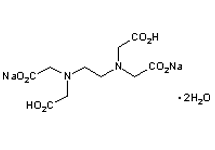
Pharmacokinetics
None recorded.
Advertisement
Indications
Disodium Edetate (Dihydrate) is primarily indicated in conditions like Calcified corneal opacity, Cardiac glycoside-induced arrhythmia, Hypercalcaemia.
Contraindications
Disodium Edetate (Dihydrate) is contraindicated in conditions like Renal diseases.
Dosage
Disodium Edetate (Dihydrate)'s dosage details are as follows:
| Dose | Single Dose | Frequency | Route | Instructions |
|---|---|---|---|---|
| Adult Dosage | ||||
| 70 mg/kg.min | 70 mg/kg.min | — | IV Inf | For 2-3 Hours for 5 Days |
| Paediatric Dosage (20kg) | ||||
| 55 mg/kg | 55 mg/kg | Every 24h | Infusion | Infuse over 3 or more hrs |
| Neonatal Dosage (3kg) | ||||
| No data. | ||||
Drug Interactions
None recorded.
Side Effects
Disodium Edetate (Dihydrate) in overdosage may give rise to further complications which include Renal tubular changes , Engorgement of reticuloendothelial cells , Coarse eosinophilic granules, Hemorrhage.
Disodium Edetate (Dihydrate) produces potentially life-threatening effects which include Convulsions , Arrhythmias, Cardiac Arrest , Cardiac arrest, Hypocalcemia. Careful monitoring is needed with proper medical management.
The signs and symptoms that are produced after acute overdosage of Disodium Edetate (Dihydrate) are Increased level of insulin.
Disodium Edetate (Dihydrate) is known to cause more or less tolerable side effects which are usually transient. These include Abdominal cramping pain, Chills, Dermatitis, Diarrhea, Fatigue, Fever, Hypotension , Local burning, Nausea, Paresthesias, Reaction at injection site, Respiratory arrest, Tetany, Weakness.
Warnings / Precautions
Interference in Pathology
Disodium Edetate (Dihydrate) may interfere in the diagnosis of Urinanalysis , Periodic BUN and creatinine determinations.
Available Brands
Storage Conditions
Drug Classification
- 1.12.2 — Antiarrhythmic drugs