
Dimercaprol
Also known as: BAL
Dimercaprol is a metal complexing agent, used as antidote to poisoninig by arsenic, mercury, lead and sometimes other metals, administered orally.
Primary Characteristics
Dimercaprol is also known as BAL.
It is of Synthetic origin and belongs to Dimercaptopropanol.
It is classified in Antidotes pharmacological group.
Molecular Weight: 124.2 · Solubility in Water: 1 in 20 · Solubility in Alcohol: freely miscible · Non-proprietary name: Dimercaprol.
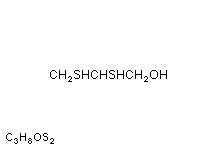
Pharmacokinetics
Absorption: Dimercaprol has an oral bioavailability is 0.5% (±0.5%).
Elimination: it is metabolised via Hepatic, plasma half-life is < 2 hr, renal excretion is major.
Advertisement
Indications
Dimercaprol is primarily indicated in conditions like Acute dichloroarsine poisoning, Antimony poisoning, Arsenic poisoning, Lead poisoning, Superficial lesions from heavy metals, Wilson's disease.
Contraindications
Dimercaprol is contraindicated in conditions like Hypertension, Hepatic failure, Iron poisoning, Selenium poisoning, Tellurium poisoning, Cadmium poisoning, Organic mercury poisoning.
Dosage
Dimercaprol's dosage details are as follows:
| Dose | Single Dose | Frequency | Route | Instructions |
|---|---|---|---|---|
| Adult Dosage | ||||
| 2.5 – 3 mg/kg | — | Every 4h | IM | For 2 days. |
| 2.75 mg/kg | 2.75 mg/kg | Every 24h | IM | |
| 5.714 mg/kg | 5.714 mg/kg | Every 12h | IM | 2-4 times a day. on third day once daily vntil recovery. |
| Paediatric Dosage (20kg) | ||||
| 2.75 mg/kg | 2.75 mg/kg | Every 8h | Intra Muscular | Initially for 2 Days |
| 2.75 mg/kg | 2.75 mg/kg | Every 8h | Intra Muscular | Maintenance |
| Neonatal Dosage (3kg) | ||||
| 2.75 mg/kg | 2.75 mg/kg | Every 4h | Intra Muscular | Initially for 2 Days |
| 2.75 mg/kg | 2.75 mg/kg | Every 12h | Intra Muscular | Maintenance |
Drug Interactions
None recorded.
Side Effects
Dimercaprol in overdosage may give rise to further complications which include Anemia , Anemia , Anemia, Anemia.
Dimercaprol produces potentially life-threatening effects which include Exacerbation of hypertension, Exacerbation of hypertension, Iron toxicity potentiation. Careful monitoring is needed with proper medical management.
Dimercaprol is known to cause more or less tolerable side effects which are usually transient. These include Abdominal pain, Fever, Headache, Increased BP , Lacrimation, Lip burning sensation, Local pain, Mouth burning sensation, Nausea, Pain at injection site, Sweating , Tachycardia, Tingling of the hand, Vomiting .
Warnings / Precautions
Interference in Pathology
Dimercaprol may interfere in the diagnosis of Elevations of SGPT and SGOT , Thyroid Funtion Test.
Available Brands
None recorded.
Storage Conditions
Drug Classification
- 1.4.2.5 — Lead poisoning