
Diltiazem (HCl)
Diltiazem is an anti-arrhythmic agent. Diltiazem (HCl) is a calcium channel blocking agent. It lowers the blood pressure by blocking calcium and relaxes the heart muscle and dilates the heart blood vessels. It has been known since the late 1800s that calcium influx was necessary for the contraction of muscle. The discovery of these channels also made possible the developemnet of clinically useful blocking drugs.
Primary Characteristics
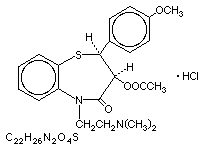
It is of Synthetic origin and belongs to Benzothiazepin.
It belongs to Calcium L-channel antagonist pharmacological group on the basis of mechanism of action.
Molecular Weight: 451 · pKa: 7.7 · Solubility in Water: freely soluble · Solubility in Alcohol: 1 in 110 · Non-proprietary name: Diltiazem (HCl) · pH: 4.3.
Pharmacokinetics
Absorption: Diltiazem (HCl) has an oral bioavailability is 90%, pre-systemic (first-pass) metabolism accounts for 50% (±5%).
Distribution: Diltiazem (HCl) has a volume of distribution is 5 l/kg. plasma protein binding is 80-90%.
Elimination: it is metabolised via extensive by liver, plasma half-life is avg 3-4.5 hr, renal excretion is major.
Advertisement
Indications
Diltiazem (HCl) is primarily indicated in conditions like Atrial fibrillation, Cardiac arrhythmia, Coronary artery spasm, Hypertension, Migraine, Moderate to severe reflux oesophagitis, Myocardial infarction, Oesophageal motility disorders, Pulmonary hypertension, Raynaud's phenomenon, Stable angina pectoris, Unstable angina.
Contraindications
Diltiazem (HCl) is contraindicated in conditions like Bradycardia, Sick sinus syndrome, Av block of ii &iii degree.
Dosage
Diltiazem (HCl)'s dosage details are as follows:
| Dose | Single Dose | Frequency | Route | Instructions |
|---|---|---|---|---|
| Adult Dosage | ||||
| 60 – 540 mg | — | Every 8h | For Angina | |
| 90 mg | 90 mg | — | To maximum of 360mg of 540mg. for hypertension. | |
| Paediatric Dosage (20kg) | ||||
| No data. | ||||
| Neonatal Dosage (3kg) | ||||
| No data. | ||||
Drug Interactions
Always consult your physician for the change of dose regimen or an alternative drug of choice that may strictly be required.
Side Effects
Diltiazem (HCl) in overdosage may give rise to further complications which include Heart block , Hypoglycemia, GI hemorrhage.
Diltiazem (HCl) produces potentially life-threatening effects which include Paralytic ileus, Pedal edema, Sinus arrest, Atrioventricular conduction disturbances, Impaired left vntricular function , Facial flushing, Acute hepatic injury, Facial flushing. Careful monitoring is needed with proper medical management.
The signs and symptoms that are produced after acute overdosage of Diltiazem (HCl) are Hypotension, Junctional bradycardia, Low cardiac output.
Diltiazem (HCl) is known to cause more or less tolerable side effects which are usually transient. These include Asthenia , AV Block , Bradycardia , Constipation , Dizziness, Drowsiness, Fainting, Fever, Flushing, GI upset, Headache, Hypotension , Insomnia, Peripheral edema, Skin rashes, Sore throat, Swelling , Weight gain.
Warnings / Precautions
Interference in Pathology
Diltiazem (HCl) may interfere in the diagnosis of Liver Function Test (LFT) .
Available Brands
Storage Conditions
Drug Classification
- 1.12.3.2 — Calcium antagonists