
Digitoxin
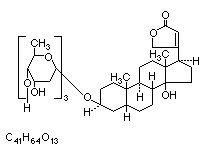
Medicinal plants containing cardiac glycosides were known to the ancient Egyptians 3000 years ago, but these agents were used randomly and with variable success until the 18th century, when William Withering an English physician and botanist, published a monograph describing the clinical effects of an extract of the foxglove plant i.e., Digitalis purpurea in 1785, described in detail the indication for use of cardiacglycoside. Digitoxin is a cardiac glycoside obtained from Digitalis purpurea and other suitable species of of Digitalis, containing 3 molecules of digitxose linked to digitoxigenin. It has both lipophilic (steroid nucleus) and hydrophilic (lactone ring, hydroxyl, sugar) groups. It makes the heart function more efficient. It increases the force of contraction of heart and slows heart rate, used to treat congestive heart failure, to control ventricular rate in the treatment of supraventricular dysrhythmias including atrial fibrillation and flutter, and to treat paroxysmal atrial tachycardia. Digitoxin is administered orally, intramuscularly or intravenously.
Primary Characteristics
Digitoxin is also known as Crystodigin.
It is of Natural origin and belongs to Glycoside.
It belongs to Sodium Potassium atpase inhibitor pharmacological group on the basis of mechanism of action and also classified in Anti arrhythmic agents pharmacological group. It is also classified under Cardiac Glycosides .
Molecular Weight: 764.9 · pKa: unionized · Solubility in Water: almost insoluble · Solubility in Alcohol: 1 in 150 · Non-proprietary name: Digitoxin.
Pharmacokinetics
Absorption: Digitoxin has an oral bioavailability is 92.5% (±2.5%).
Distribution: Digitoxin has a volume of distribution is 0.5 l/kg. plasma protein binding is >90%.
Elimination: it is metabolised via hepatic, plasma half-life is 3-16 days or avg. 7.5 days, renal excretion is 75%.
Advertisement
Indications
Digitoxin is primarily indicated in conditions like Acute left ventricular failure, Atrial fibrillation, Atrial flutter, Chronic left ventricular failure, Congestive heart failure, Heart failure, Ischaemic heart disease, Supraventricular arrhythmias (particularly atrial fibrillation), Supraventricular tachycardia.
Contraindications
Digitoxin is contraindicated in conditions like Heart block, Obstructive cardiomyopathy, Wolf-parkinson-white syndrome, Myocarditis, Congestive cardiomyopathies, Constrictive pericarditis, Chronic cor pulmonale, Aortic valve disease.
Dosage
Digitoxin's dosage details are as follows:
| Dose | Single Dose | Frequency | Route | Instructions |
|---|---|---|---|---|
| Adult Dosage | ||||
| 85 ug | 85 ug | Every 24h | IV | But injections may may cause irritation. |
| 1.75 ug/kg | 1.75 ug/kg | Every 24h | PO | Maintenance, As Required |
| 5.84 ug/kg | 5.84 ug/kg | Every 24h | PO | Load for 3-days. |
| Paediatric Dosage (20kg) | ||||
| 20 ug/kg | 20 ug/kg | — | ||
| Neonatal Dosage (3kg) | ||||
| No data. | ||||
Drug Interactions
Always consult your physician for the change of dose regimen or an alternative drug of choice that may strictly be required.
Side Effects
Digitoxin in overdosage may give rise to further complications which include Thrombocytopenia , Hypersensitivity reactions , Ventricular tachycardia , Ventricular fibrillation , Supraventricular extra beats , Color vision disturbance, Sinus bradycardia , Heart block , Gynacomastia .
Digitoxin produces potentially life-threatening effects which include Cardiac arrhythmias. Careful monitoring is needed with proper medical management.
The signs and symptoms that are produced after acute overdosage of Digitoxin are Heart block, Hyperkalemia, Ventricular arrhythmias.
Digitoxin is known to cause more or less tolerable side effects which are usually transient. These include Agitation , Amnesia , Anorexia , Confusion, Delirium , Dizziness, Drowsiness, GI symptoms, Nausea, nervousness, PR interval prolongation, Restlessness, Vomiting .
Warnings / Precautions
Interference in Pathology
Digitoxin may interfere in the diagnosis of No well documented.
Available Brands
None recorded.
Storage Conditions
Drug Classification
- 1.12.2 — Antiarrhythmic drugs
- 2.12.4 — Drugs used in heart failure