
Digoxin
Also known as: Digitek.
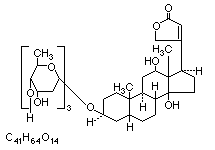
Medicinal plants containing cardiac glycosides were known to the ancient Egyptians 3000 years ago, but these agents were used randomly and with variable success until the 18th century, when William Withering an English physician and botanist, published a monograph describing the clinical effects of an extract of the foxglove plant i.e., Digitalis purpurea in 1785, described in detail the indication for use of cardiacglycoside. Digoxin is considered as a prototype cardiac glycoside, combine a steroid nucleus with an unsaturated five membered lactone ring at the 17th position and a series of sugar linked to carbon 3 of nucleus, containing 3 molecules of digitxose linked to digitoxigenin. Digoxin is obtained from the leaves of Digitalis lanata. It makes the heart function more efficient. It increases the force of contraction of heart and slows heart rate, used to treat congestive heart failure, to control ventricular rate in the treatment of supraventricular dysrhythmias including atrial fibrillation and flutter, and to treat paroxysmal atrial tachycardia. Digoxin - specific antibody fragments are used FOR the treatment of known or strongly suspected, life - threatening digoxin or digitoxin overdosage, where measures beyond the discontinuation of digoxin or digitoxin and correction of electrolyte abnormality are felt to be necessary.
Primary Characteristics
Digoxin is also known as Digitek..
It is of Natural origin and belongs to Glycosides.
It belongs to Sodium Potassium atpase inhibitor pharmacological group on the basis of mechanism of action and also classified in Anti arrhythmic agents pharmacological group. It is also classified under Cardiac Glycosides .
Molecular Weight: 780.9 · pKa: unionized · Solubility in Water: insoluble · Solubility in Alcohol: 1 in 122 (slightly soluble) · Non-proprietary name: Digoxin.
Pharmacokinetics
Absorption: Digoxin has an oral bioavailability is 95% (±5%), pre-systemic (first-pass) metabolism accounts for 67.5% (±17.5%).
Distribution: Digoxin has a volume of distribution is 6-7l/kg. plasma protein binding is 20-30%.
Elimination: it is metabolised via 10-20%hepatic, plasma half-life is 36-41hrs or 1.5-2 days, renal excretion is 60-90%.
Advertisement
Indications
Digoxin is primarily indicated in conditions like Acute left ventricular failure, Atrial fibrillation, Atrial flutter, Chronic left ventricular failure, Congestive heart failure, Heart failure, Ischaemic heart disease, Supraventricular arrhythmias (particularly atrial fibrillation), Supraventricular tachycardia.
Contraindications
Digoxin is contraindicated in conditions like Heart block, Obstructive cardiomyopathy, Wolf-parkinson-white syndrome, Congestive cardiomyopathies, Constrictive pericarditis, Chronic cor pulmonale, Aortic valve disease, Acute myocarditis.
Dosage
Digoxin's dosage details are as follows:
| Dose | Single Dose | Frequency | Route | Instructions |
|---|---|---|---|---|
| Adult Dosage | ||||
| 25 ug/kg | 25 ug/kg | — | For 5-10 years | |
| 35 ug/kg | 35 ug/kg | — | 2-5 years | |
| 187.5 ug | 187.5 ug | Every 24h | PO | Maintenance, As Required |
| 1125 ug | 1125 ug | Every 6h | PO | In div.doses. |
| Paediatric Dosage (20kg) | ||||
| 3.75 ug/kg | 3.75 ug/kg | Every 12h | Intra Muscular | Maintenance (25% of loading dose) |
| 30 ug/kg | 30 ug/kg | — | Intra Musular | Initially As Required |
| 3.75 ug/kg | 3.75 ug/kg | Every 12h | Intra Venous | Maintenance (25% of loading dose) |
| 30 ug/kg | 30 ug/kg | — | Intra Venous | Initially As Required |
| 4.375 ug/kg | 4.375 ug/kg | Every 12h | Oral | Maintenance (25% of loading dose) |
| 35 ug/kg | 35 ug/kg | — | Oral | Initially, As Required |
| Neonatal Dosage (3kg) | ||||
| 6.25 mg/kg | 6.25 mg/kg | Every 12h | oral | Maintenance, As required |
| 47.5 ug/kg | 47.5 ug/kg | — | oral | Initial dose, As required |
Drug Interactions
Always consult your physician for the change of dose regimen or an alternative drug of choice that may strictly be required.
Side Effects
Digoxin in overdosage may give rise to further complications which include Ventricular tachycardia , Ventricular fibrillation , Supraventricular extra beats , Heart block , Rhodopsia , Cyanopsia, Castanopsia , Melanopsin, Increased FSH (follicular stimulating hormone), Increased estrogen, Decreased LH, Decreased testosterone , Color vision disturbance.
Digoxin produces potentially life-threatening effects which include Cardiac arrhythmias, Heart block. Careful monitoring is needed with proper medical management.
The signs and symptoms that are produced after acute overdosage of Digoxin are Ventricular arrhythmias, Heart block, Hyperkalemia.
Digoxin is known to cause more or less tolerable side effects which are usually transient. These include Agitation , Anorexia , dizziness, Drowsiness, ECG changes, Gynecomastia, Nausea, Nervousness, Potassium depletion, PR interval prolongation, Restlessness, Skin lesion, Thrombocytopenia, Vomiting .
Warnings / Precautions
Interference in Pathology
Digoxin may interfere in the diagnosis of Increase apparent conc. of 17-OH Corticosteroids in the Urine. .
Available Brands
Click on a strength to view available brands.
Single Ingredient
Storage Conditions
Drug Classification
- 1.4.2.11 — Miscellaneous
- 2.12.2 — Antiarrhythmic drugs
- 3.12.4 — Drugs used in heart failure