
vildagliptin
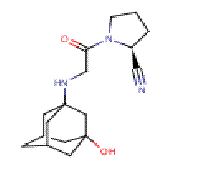
vildagliptin is a dipeptidyl peptidase-4 (DPP-4) inhibitor. It works by increasing the amount of two incretin hormones found in the body, called glucagon-like peptide-1 (GLP-1) and glucose-dependent insulinotropic peptide (GIP). These hormones are normally produced naturally by the body in response to food intake. Their function is to help control blood sugar (glucose) levels. It is used to treat type 2 or non-insulin dependent diabetes (NIDDM) in combination with a sulphonylurea (50 mg once daily), metformin or a glitazone (50 mg twice daily).
Primary Characteristics
It belongs to DPP-4 inhibitor pharmacological group on the basis of mechanism of action.
Molecular Weight: 303.4 · Solubility in Water: 1.75e+00 g/l · Non-proprietary name: vildagliptin.
Pharmacokinetics
Absorption: vildagliptin has an oral bioavailability is 85%.
Distribution: vildagliptin has a volume of distribution is Vss 71 liters after IV administration. plasma protein binding is 9.3%.
Elimination: it is metabolised via mainly by hydrolysis in Kidney, plasma half-life is 90 minutes, renal excretion is 85% in urine and 15% in faeces..
Advertisement
Indications
vildagliptin is primarily indicated in conditions like Type II diabetes mellitus.
Contraindications
vildagliptin is contraindicated in conditions like Hypersensitivity to the drug.
Dosage
vildagliptin's dosage details are as follows:
| Dose | Single Dose | Frequency | Route | Instructions |
|---|---|---|---|---|
| Adult Dosage | ||||
| 50 mg | 50 mg | Every 12h | oral | When used in dual combination with metformin or a thiazolidinedione. It can be taken with or without food. No dose adjustment is required in patients with mild renal impairment (creatinine clearance GREATER-THAN OR EQUAL TO 50ml/min). The use of vildagliptin is not recommended in patients with moderate or severe renal impairment or in haemodialysis patients with end-stage renal disease (ESRD). |
| 75 mg | 75 mg | Every 24h | oral | When used in dual combination with a sulphonylurea it is recommended once daily. Doses higher than 100mg are not recommended. It can be taken with or without food. It is not recommended for use in children (less then 18 years) and adolescents due to a lack of data on safety and efficacy. |
| Paediatric Dosage (20kg) | ||||
| No data. | ||||
| Neonatal Dosage (3kg) | ||||
| No data. | ||||
Drug Interactions
None recorded.
Side Effects
vildagliptin produces potentially life-threatening effects which include Angioedema . Careful monitoring is needed with proper medical management.
The signs and symptoms that are produced after acute overdosage of vildagliptin are Muscle aches, Swelling of feet and lower legs, Fever, Mild paresthesia.
vildagliptin is known to cause more or less tolerable side effects which are usually transient. These include Asthenia , Dizziness, Fatigue, Headache, Hypoglycemia, Nausea.
Warnings / Precautions
Available Brands
Storage Conditions
Drug Classification
- 1.18.7.2 — Oral hypoglycemics