
Desmopressin (Acetate)
Also known as: 1 Desamino-8-D-arginine vasopressin
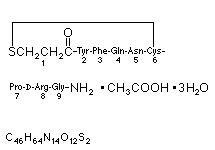
Desmopressin is a long acting synthetic analog of 8-arginine vasopressin. It has an anti-diuretic to pressor ratio 4000 times than that of vasopressin, which is the pressor and antidiuretic principle of posterior lobe of pituitary gland. Desmopressin (Acetate) is used intranasally in diabetes insipidus and nocturnal enuresis.
Primary Characteristics
Desmopressin (Acetate) is also known as 1 Desamino-8-D-arginine vasopressin.
It is of Synthetic origin and belongs to Polypeptide.
It belongs to Vasopressin V2 agonist pharmacological group on the basis of mechanism of action. It is also classified under Posterior Pituitary Hormones .
Molecular Weight: 1183.2 · pKa: 4.8 · Solubility in Water: good · Non-proprietary name: Desmopressin (Acetate).
Pharmacokinetics
Absorption: Desmopressin (Acetate) has an oral bioavailability is 15% (±5%).
Elimination: it is metabolised via partial hepatic, plasma half-life is 8min & 75min (Biphasic pharmacokinetics), renal excretion is partial.
Advertisement
Indications
Desmopressin (Acetate) is primarily indicated in conditions like Diabetes insipidus, Haemophilia, Nocturnal enuresis, Post-lumbar puncture headache, Primary nocturnal enuresis, Renal function testing, Von willebrand's disease.
Desmopressin (Acetate) is also indicated for secondary conditions like Nocturia associated with multiple sclerosis, Polydipsia.
Contraindications
Desmopressin (Acetate) is contraindicated in conditions like Hypertension, Renal diseases, Cardiovascular disease.
Dosage
Desmopressin (Acetate)'s dosage details are as follows:
| Dose | Single Dose | Frequency | Route | Instructions |
|---|---|---|---|---|
| Adult Dosage | ||||
| 25 ug | 25 ug | — | Intra Nasal | Single dose or may be given in 2-3 divided doses. |
| 300 – 400 ng/kg | — | — | IV infusion | Given over 15 to 30 min for haemophillia or type I von Willebrand's disease and also given for testing of fibirinolytic response |
| 200 – 400 ug | — | — | Orally | For primary nocturnal enuresis. |
| 100 ug | 100 ug | Every 8h | Orally | As in initial dose for cranial diabetes insipidus. |
| 0.15 mg | 0.15 mg | Every 8h | PO | |
| Paediatric Dosage (20kg) | ||||
| 0.04 ug/kg | 0.04 ug/kg | — | Intra Muscular | Single dose recommended in diabetes incipidus |
| 0.04 ug/kg | 0.04 ug/kg | — | Intra Venous | Single dose recommended in diabetes incipidus |
| 2.5 – 20 ug | — | Every 12h | Nasal | |
| 10 ug | 10 ug | Every 8h | Oral | For 1 month to 2years. Given as initial dose and adjusted according to response. |
| 50 ug | 50 ug | Every 8h | Orally | for 2 to 12 year. |
| 100 ug | 100 ug | Every 8h | Orally | for 12 to 18 years |
| Neonatal Dosage (3kg) | ||||
| No data. | ||||
Drug Interactions
Always consult your physician for the change of dose regimen or an alternative drug of choice that may strictly be required.
Side Effects
Desmopressin (Acetate) in overdosage may give rise to further complications which include Cerebral & Coronary thrombosis.
Desmopressin (Acetate) produces potentially life-threatening effects which include Hyponatremia, Hyponatremia. Careful monitoring is needed with proper medical management.
The signs and symptoms that are produced after acute overdosage of Desmopressin (Acetate) are Seizures, Hypotonic hyponatremia.
Desmopressin (Acetate) is known to cause more or less tolerable side effects which are usually transient. These include Abdominal cramps, Flushing, Headache, Maculopapular rash, Nasal congestion , Nausea, Rhinitis .
Warnings / Precautions
Interference in Pathology
Desmopressin (Acetate) may interfere in the diagnosis of Cross reacts with some antisera raised against arginine vasoprossin & oxytocin .
Available Brands
Storage Conditions
Drug Classification
- 1.10.3 — Antihemorrhagics/Antihemophilics
- 2.18.12 — Drugs used in diabetes insipidus