
Clorazepate (K)
Clorazepate (K) is a benzodiazipine. Benzodiazipines are the most widely used anxiolytic drugs. The benzodiazipines are more effective and safer. They have largely replaced barbiturates and meprobamate in the treatment of anxiety. Clorazepate is administered orally and is also given in seizure disorders.
Primary Characteristics
It is of Synthetic origin and belongs to Benzodiazepine.
It is classified in Antianxiety Agent , Benzodiazepine pharmacological group. It is also classified under Psychotherapeutic Drugs .
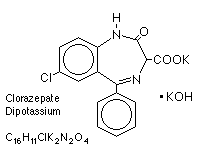
Molecular Weight: 408.9 · pKa: 12.23 · Solubility in Water: freely soluble · Solubility in Alcohol: very low · Non-proprietary name: Clorazepate (K).
Pharmacokinetics
Distribution: Clorazepate (K) has a volume of distribution is 1.24l/kg. plasma protein binding is 98%.
Elimination: it is metabolised via via gut, plasma half-life is 50-100 hr, renal excretion is major.
Advertisement
Indications
Clorazepate (K) is primarily indicated in conditions like Alcohol withdrawal, Anxiety, Insomnia, Neurosis, Partial seizures, Premedication in anaesthesia, Psychoneurosis, Psychosomatic disorders, Suppression of transplant rejection.
Clorazepate (K) is also indicated for secondary conditions like Epilepsy.
Contraindications
Clorazepate (K) is contraindicated in conditions like Pulmonary insufficiency, Narrow-angle glaucoma, Hypersensitivity.
Dosage
Clorazepate (K)'s dosage details are as follows:
| Dose | Single Dose | Frequency | Route | Instructions |
|---|---|---|---|---|
| Adult Dosage | ||||
| 11.25 mg | 11.25 mg | Every 24h | PO | Frequency may be increased upto 4 times/day if needed. |
| Paediatric Dosage (20kg) | ||||
| 7.5 mg | 7.5 mg | Every 24h | initial dose mentanance | |
| 7.5 mg | 7.5 mg | Every 24h | oral | (over 12 years of age) |
| 7.5 mg | 7.5 mg | — | oral 33.3 | initial dose for less then or equal to 13 years.(over 12 years of age) |
| Neonatal Dosage (3kg) | ||||
| 0 – 0 | — | — | Not recommended in thi age group | |
Drug Interactions
Always consult your physician for the change of dose regimen or an alternative drug of choice that may strictly be required.
Side Effects
Clorazepate (K) in overdosage may give rise to further complications which include Dependence , Jaundice , Aggression, Psychological impairment , Cerebral atrophy .
Clorazepate (K) produces potentially life-threatening effects which include Blood dyscrasias. Careful monitoring is needed with proper medical management.
The signs and symptoms that are produced after acute overdosage of Clorazepate (K) are Coma, Ataxia, Mental confusion, Respiratory depression, Drowsiness, Nystagmus.
Clorazepate (K) is known to cause more or less tolerable side effects which are usually transient. These include Ataxia, Blurred vision, Confusion, Diplopia, Dizziness, Drowsiness, Dry mouth, Euphoria, GI upset, Headache, Irritability, Nightmares, Paradoxical rage, Skin rashes, Slurred speech, Syncope , Tremor, Vertigo, Xerostomia .
Warnings / Precautions
Available Brands
None recorded.
Storage Conditions
Drug Classification
- 1.5 — Anticonvulsants and Antiepileptics
- 2.24.3 — Drugs used in anxiety and sleep disorders