
Chlortetracycline (HCl)
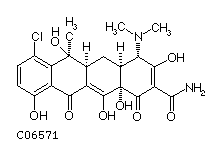
Chlortetracycline is a broad spectrum tetracycline antibiotic. Tetracyclines are derivative of polycyclic naphthacenecarboxamide. They are bacteriostatic and effective against many gram positive and gram negative bacteria. Chlortetracycline is isolated from Streptomyces aureofaciens. It was introduced in 1948 and was the first of the tetracycline group to be discovered. Chlortetracycline (HCl) is used as an antibacterial and antiprotozoal administered orally, by intravenous injection, or applied topically to the conjuctiva. Antibiotics require constant drug level in body for therapeutic effect. This is achieved by taking the drug at regular interval of time throughout the day and night as prescribed. Chlortetracycline (HCl) is important to take the drug for the full time period as prescribed. If you discontinue the drug, it may result in ineffective treatment.
Primary Characteristics
It is of Semi Synthetic origin and belongs to Tetracycline.
It belongs to Antibacterial (Proetin synthesis inhibitor) pharmacological group on the basis of mechanism of action and also classified in Antibiotic, Tetracycline Derivative pharmacological group. It is also classified under Opthalmic Products .
Molecular Weight: 515.3 · pKa: 7.4 · Solubility in Water: 1 in 100 · Solubility in Alcohol: 1 in 400 · Non-proprietary name: Chlortetracycline (HCl).
Pharmacokinetics
Absorption: Chlortetracycline (HCl) has an oral bioavailability is 60%.
Distribution: Chlortetracycline (HCl) has a volume of distribution is 2 l/kg. plasma protein binding is 50%.
Elimination: it is metabolised via insignificant, plasma half-life is 5-6 hr, renal excretion is 20%.
Advertisement
Indications
Chlortetracycline (HCl) is primarily indicated in conditions like Acne, Bacterial infections, Genitourinary tract infections, GI infections, Opthalmic infections, Pneumonia, Pyogenic infections, Respiratory tract infections, Soft tissue infections.
Contraindications
Chlortetracycline (HCl) is contraindicated in conditions like Systemic lupus erythematosus, Renal impairment, Hepatic impairment, Hypersensitivity.
Dosage
Chlortetracycline (HCl)'s dosage details are as follows:
| Dose | Single Dose | Frequency | Route | Instructions |
|---|---|---|---|---|
| Adult Dosage | ||||
| 0 – 0 mg/kg | — | — | PO | 1% Ophalmic oinntmen 3% ointment |
| Paediatric Dosage (20kg) | ||||
| 0 – 0 | — | — | — | Not Recommended in this Age Group |
| Neonatal Dosage (3kg) | ||||
| 0 – 0 | — | — | — | Not Recommended in this Age Group |
Drug Interactions
Always consult your physician for the change of dose regimen or an alternative drug of choice that may strictly be required.
Side Effects
Chlortetracycline (HCl) in overdosage may give rise to further complications which include Staining of developing teeth , Superinfection , Sever sun burn, Hypoplasia of enamel , Gastric discomfort.
Chlortetracycline (HCl) produces potentially life-threatening effects which include Fatal liver damage, Anaphylaxis , Hepatic necrosis, Fatal liver damage, Phototoxicity, fatal neciosis, effects on classified tissues. Careful monitoring is needed with proper medical management.
The signs and symptoms that are produced after acute overdosage of Chlortetracycline (HCl) are Coma, Hypotension, Nausea, Jaundice, Raised hepatic enzymes, Vomiting, Abdominal pain, Intestinal hemorrhage, Jaundice , Lethargy.
Chlortetracycline (HCl) is known to cause more or less tolerable side effects which are usually transient. These include Anogenital inflammatory lesions , Anorexia , Bulging fontanelle in Infants, Diarrhea, Enterocolitis , Glossitis, Hemolytic anemia, Intracranial hypertension, Nausea, Skin rashes, Stomatitis, Thrombocytopenia, Vaginitis, Vestibular problems.
Warnings / Precautions
Interference in Pathology
Chlortetracycline (HCl) may interfere in the diagnosis of Rise in Blood Urea, Eosinophils Count, SGPT, SGOT and Bilirubin. , Intereference with Urinary Urobilinogen Levels. .
Available Brands
None recorded.
Storage Conditions
Drug Classification
- 1.6.2.2.3 — Tetracyclines