
Chlorthalidone
Also known as: Chlortalidone
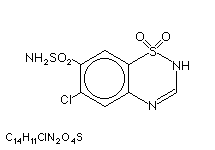
Chlorthalidone is an antihypertensive agent. Chlorthalidone is a sulfonamide derivative. It has different chemical structure from thiazide but the same pharmacological actions as that of thiazide diuretic. It increases the urination and reduces the amount of water and sodium retained by the body. Chlorthalidone is administered orally.
Primary Characteristics
Chlorthalidone is also known as Chlortalidone.
It is of Synthetic origin and belongs to Sulphonamide.
It belongs to NaCl cotransport inhibitor pharmacological group on the basis of mechanism of action and also classified in Diuretic Thiazide pharmacological group.
Molecular Weight: 338.8 · pKa: 9.4 · Solubility in Water: insoluble · Solubility in Alcohol: 1 in 150 · Non-proprietary name: Chlorthalidone.
Pharmacokinetics
Absorption: Chlorthalidone has an oral bioavailability is 65% (±5%), pre-systemic (first-pass) metabolism accounts for 0.5% (±0.5%).
Distribution: Chlorthalidone has a volume of distribution is 3-5 l/kg. plasma protein binding is 75%.
Elimination: it is metabolised via Negligible, plasma half-life is 50-90 hr, renal excretion is 50% to 65%.
Advertisement
Indications
Chlorthalidone is primarily indicated in conditions like Edema, Essential hypertension, Heart failure, Hypertension, Idiopathic hypercalciuria, Menieres disease, Mild to moderate chronic heart failure, Nephrogenic and partial pituitary diabetes insipidus, Nephrolithiasis, Oedema.
Contraindications
Chlorthalidone is contraindicated in conditions like Allergy, Diabetes mellitus, Anuria.
Dosage
Chlorthalidone's dosage details are as follows:
| Dose | Single Dose | Frequency | Route | Instructions |
|---|---|---|---|---|
| Adult Dosage | ||||
| 1.6 mg/kg | 1.6 mg/kg | Every 24h | PO | - |
| Paediatric Dosage (20kg) | ||||
| 2.5 mg/kg | 2.5 mg/kg | Every 24h | Oral | - |
| Neonatal Dosage (3kg) | ||||
| 2.5 mg/kg | 2.5 mg/kg | Every 24h | oral | |
Drug Interactions
Always consult your physician for the change of dose regimen or an alternative drug of choice that may strictly be required.
Side Effects
Chlorthalidone in overdosage may give rise to further complications which include Hypersensitivity reactions .
Chlorthalidone produces potentially life-threatening effects which include Hypokalemia, Idiosyncratic hypersensitivity, Hyperosmolar non-ketotic diabetic coma , Hypokalemia. Careful monitoring is needed with proper medical management.
The signs and symptoms that are produced after acute overdosage of Chlorthalidone are Hypokalemia , Jaundice, Coma, Hypochloremic alkalosis, Hypersensitivity reactions, Lethargy, Jaundice .
Chlorthalidone is known to cause more or less tolerable side effects which are usually transient. These include Azotemia, Constipation , Diarrhea, Dizziness, Dry mouth, Fatigue, Headache, Hypokalemia , Impotence, Muscle cramps, Myopathy, Nausea, Rhabdomyolysis, Vertigo, Weakness.
Warnings / Precautions
Available Brands
Storage Conditions
Drug Classification
- 1.16.1 — Thiazide and related diuretics