
Chloramphenicol
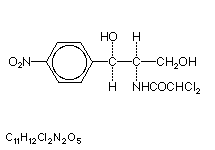
Chloramphenicol was first isolated in 1947 from the cultures of Streptomyces venezuelae. Chloramphenicol was synthesized in 1949, becoming the first completely synthetic antibiotic of importance to be produced commercially. Chloramphenicol is a broad spectrum antibiotic. Chloramphenicol is a nitrobenzene derivative. Chloramphenicol is primarily bacteriostatic and may be bacteriocidal to some strains. Chloramphenicol is active against both aerobic and anaerobic gram positive and gram negative organisms, rickettsiae and certain spirochetes. Adminitered orally or applied topically. Antibiotics require constant drug level in body for therapeutic effect. This is achieved by taking the drug at regular interval of time throughout the day and night as prescribed. Chloramphenicol is important to take the drug for the full time period as prescribed. If you discontinue the drug Chloramphenicol may result in ineffective treatment.
Primary Characteristics
Chloramphenicol is also known as Chloramphenicol Palmitat.
It is of Semi Synthetic origin and belongs to Nitrophyenyl acetamide.
It belongs to Peptidyl transferase inhibitor pharmacological group on the basis of mechanism of action and also classified in Antibiotics pharmacological group.
Molecular Weight: 323.1 · pKa: 5.5 · Solubility in Water: 1 in 400 · Solubility in Alcohol: 1 in 2.5 · Non-proprietary name: Chloramphenicol · pH: 6.1 · Isotonic value: 6.83.
Pharmacokinetics
Absorption: Chloramphenicol has an oral bioavailability is 85% (±5%), pre-systemic (first-pass) metabolism accounts for 25% (±5%).
Distribution: Chloramphenicol has a volume of distribution is 0.25-1.99 l/kg. plasma protein binding is ~53%.
Elimination: it is metabolised via Hepatic, plasma half-life is 1.7-12 hr, renal excretion is 5-15% (unchanged) , less than 3% in bile.
Advertisement
Indications
Chloramphenicol is primarily indicated in conditions like Acromegaly, Acute epiglottitis, Anaerobic infections, Bacterial infections, Blepharitis, Brain abscesses, Brucellosis, Cellulitis, Corneal ulcers, Intraocular infections, Iron deficiency anaemia, Keratoconjuctivitis sicca, Life threatning infections, Meningitis, Peritonitis, Plague, Psittacosis, Q Fever, Septicaemia, Spotted fever, Tularemia, Typhoid.
Chloramphenicol is also indicated for secondary conditions like Enteritis, Gangrene, Haemophilia, Influenza, Whipple's disease.
Contraindications
Chloramphenicol is contraindicated in conditions like Hypersensitivity.
Dosage
Chloramphenicol's dosage details are as follows:
| Dose | Single Dose | Frequency | Route | Instructions |
|---|---|---|---|---|
| Adult Dosage | ||||
| 0.5 %w/v | 0.5 %w/v | Every 12h | Ophthalmic | 1-2 drops 4-6 times a day for first 72 hours.Treatment should be continued for approx 7days. |
| 1 %w/w | 1 %w/w | Every 6h | Ophthalmic | Frequency may be increased to 8 times if needed. |
| 5 – 10 % | — | Every 6h | Otic | 1-2 drops. |
| 50 – 100 mg/kg | — | Every 6h | PO,IV | Maximum dose: 4 g/day. |
| Paediatric Dosage (20kg) | ||||
| 18.75 mg/kg | 18.75 mg/kg | Every 6h | Intra Venous | - |
| 18.75 mg/kg | 18.75 mg/kg | Every 6h | Oral | - |
| Neonatal Dosage (3kg) | ||||
| 18.75 mg/kg | 18.75 mg/kg | Every 6h | Intravenous | |
| 18.75 mg/kg | 18.75 mg/kg | Every 6h | oral | |
Drug Interactions
Always consult your physician for the change of dose regimen or an alternative drug of choice that may strictly be required.
Side Effects
Chloramphenicol in overdosage may give rise to further complications which include Encephalopathy , Pseudomembranous colitis , Urticaria , Thrombocytopenia , Hepatitis , Aplastic anemia , Hemolytic anemia , Aplastic anemia , Hemolytic anemia , Ototoxicity , Peripheral neuropathy , Optic neuritis , Hemolytic reactions , Interstitial nephritis , Hemolytic anemia, Aplastic anemia, Hair growth depression, Physical growth depression.
Chloramphenicol produces potentially life-threatening effects which include Bone marrow suppression, Grey baby syndrome, Anaphylaxis . Careful monitoring is needed with proper medical management.
The signs and symptoms that are produced after acute overdosage of Chloramphenicol are Grey baby syndrome.
Chloramphenicol is known to cause more or less tolerable side effects which are usually transient. These include Confusion, Delirium , Depression, Diarrhea, Glossitis, Headache, Maculopapular rash, Nausea, Pruritus , Salmonella infection, Stomatitis, Transient stinging, Typhoid, Vision disturbances, Vomiting .
Warnings / Precautions
Interference in Pathology
Chloramphenicol may interfere in the diagnosis of Interferes with the determination of total protein & blood urea nitrogen. , Effects the determination of urine sugar, 17-ketosteroids & 17-OH corticosteroids. .
Available Brands
Click on a strength to view available brands.
Single Ingredient
Storage Conditions
Drug Classification
- 1.6.2.2.1 — Chloramphenicol
- 2.21.1.1 — Antibacterials
- 3.28 — Otic drugs
Manufacturers
Manufacturers of Chloramphenicol in Pakistan: