
Chlorambucil
Also known as: Chloraminophene
Chlorambucil is an alkylating agent of nitrogen mustard group, also known as anti-cancerous drug. All alkylating agents have or can form an alkyl group that becomes covalently bound to cellular constituents. Chlorambucil is effective in the treatment of different cancers such as chronic lymphocytic leukemia, multiple myeloma, and lymphosarcoma. Aministered orally. Chlorambucil is used in combination with other anticancerous drugs to obtain best therapeutic effects and to minimize side effects or toxicities.
Primary Characteristics
Chlorambucil is also known as Chloraminophene.
It is of Synthetic origin and belongs to Alanine mustard.
It belongs to Alkylating Agents pharmacological group on the basis of mechanism of action and also classified in Antineoplastic Agent, Alkylating Agent pharmacological group.
Molecular Weight: 304.2 · pKa: 5.8 · Solubility in Water: < 1 in 10000 · Solubility in Alcohol: 1 in 1.5 · Non-proprietary name: Chlorambucil.
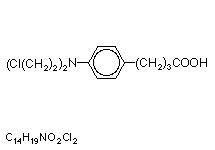
Pharmacokinetics
Absorption: Chlorambucil has an oral bioavailability is 87% (±20%).
Distribution: Chlorambucil has a volume of distribution is 0.29l/kg. plasma protein binding is 99%.
Elimination: it is metabolised via renal & hepatic, plasma half-life is 1-2 hr, renal excretion is <1.
Advertisement
Indications
Chlorambucil is primarily indicated in conditions like Breast cancer, Chronic lymphocytic leukaemia, Hodgkin's disease, Leukaemia, Macroglobulinemia, Non-hodgkin's lymphoma, Non-hodgkin's lymphoma, Ovarian cancer, Waldenstrom's macroglobulinaemia.
Contraindications
Chlorambucil is contraindicated in conditions like Thrombocytopenia, Leukopenia.
Dosage
Chlorambucil's dosage details are as follows:
| Dose | Single Dose | Frequency | Route | Instructions |
|---|---|---|---|---|
| Adult Dosage | ||||
| 150 ug/kg | 150 ug/kg | Every 24h | PO | For 3-8 Weeks, As Required |
| Paediatric Dosage (20kg) | ||||
| 0.15 mg/kg | 0.15 mg/kg | Every 24h | Oral | - |
| Neonatal Dosage (3kg) | ||||
| 0 – 0 | — | — | No indication for use in neonates | |
Drug Interactions
Always consult your physician for the change of dose regimen or an alternative drug of choice that may strictly be required.
Side Effects
Chlorambucil in overdosage may give rise to further complications which include Hepatotoxicity , Marrow failure , Amenorrhea, Azoospermia , Hepatotoxicity , Ovarian function suppression.
Chlorambucil produces potentially life-threatening effects which include Bone marrow suppression, Neutropenia , Interstitial pulmonary fibrosis, Chromosome damage, Lymphocytopenia. Careful monitoring is needed with proper medical management.
The signs and symptoms that are produced after acute overdosage of Chlorambucil are Neurotoxicity, Ataxia, Grand Mal Seizures (epilepsy), Irreversible marrow failure, Agitation.
Chlorambucil is known to cause more or less tolerable side effects which are usually transient. These include Abdominal discomfort, Cystitis, Diarrhea, Hypersensitivity reactions, Nausea, Oral ulceration, Skin rash, Stevens Johnson syndrome, Vomiting .
Warnings / Precautions
Available Brands
None recorded.
Storage Conditions
Drug Classification
- 1.8.2 — Cytotoxic (anti-neoplastic) drugs